Scams 101: What to Look Out for During the Holidays

Now that Thanksgiving has passed, holiday shopping is in full swing. Even though inflation will affect consumer spending and shopping habits, holiday sales are still expected to reach $1.45 to $1.47 trillion this year. And as with any big shopping event, it’s expected that fraudsters will find ways to scam consumers.

Every year, scammers use similar tactics to trick shoppers. While some are more obvious than others, it’s important consumers stay aware of common holiday fraud patterns so they can protect themselves and their finances. Here’s what you should be on the lookout for this holiday season.

Online holiday shopping fraud

Malls and local department stores can be overwhelming this time of year, so it’s no surprise more individuals are choosing to shop online. In fact, e-commerce sales are expected to increase 14.3% and hit up to $264 billion. Convenience is key when it comes to shopping, but that means there’s more to be on the lookout for too – including scam e-commerce shops.

When looking for specific out-of-stock or pricey items, it may be tempting to purchase a version found on a website resembling a legitimate store. However, these scam shops can take your personal and payment information and then never actually ship the item. Fraudulent e-commerce websites are more common than you think. These fake sites mimicking legitimate stores grew 178% in 2021 with 5,300 new websites per week.

Trust your gut. If you see a site like this, do a thorough Google search to see if the company has legitimate reviews. If you see others mentioning it looks fake or is a scam, do not buy any items from their website.

Online banking scams

More than 65% of people use an online banking service to manage their finances. And as digital services have gotten more popular, scammers are using smarter con methods to access an individual’s finances or take their identity. Here are major online banking scams to look out for.

  • Loan scams: When scammers pretend to be a legitimate bank offering a low-rate loan through an email or convincing website. This is a way for them to take your information and access your bank account.
  • Wire fraud in real estate: A scam where someone will use already occurring real estate transactions to hack the company and make wire transfers to themselves. These transactions can seem legitimate and go undetected if not monitored.
  • Fraudulent checks: When an individual is used as a mule for fraudulent checks. This will look like an email or message from someone they know, asking the person to help by opening a bank account and cashing a check, and promising them a portion of the money. These checks will bounce and cause the victim’s account balance to go negative.

 Related Article: How to Avoid Banking Scams and Stay Safe Online

Seasonal job scams

With the increasing number of remote work opportunities, job seekers are vulnerable to employment scams. Typically with seasonal jobs, you might think of retail or restaurant gigs – but e-commerce roles are also becoming more popular. These scams can look like typical remote work, but contain promises that seem too good to be true. Oftentimes the company will ask you to cover work expenses upfront with the promise of paying you back through a check or transfer. With any job listing you’re applying to, it’s crucial you do extensive research on the company and assess if this is a legitimate opportunity.

Travel and vacation fraud

Holiday travel and family vacations are a desired market for fraudsters. In 2021, there were over 4,000 mentions of fraudulent airlines and hotel offers featured on the dark web. With such a large industry – travel fraud can take on many forms, including frequent flyer mileage scams, currency exchange, bogus travel agencies, rental cons, fake hotel or flight listings, and more. This is yet another way for scammers to take your information and access your finances. When it comes to travel (and any purchase), it’s important to buy from websites and companies you know and trust. If you see a package deal, do your research to ensure it’s a real offer.

You can count on First Financial to go above and beyond to help you avoid fraud and protect your finances. If you ever see something suspicious, you can always contact one of our financial experts to help you determine if the offer, website, or service is legitimate. Contact our member services department at 732-312-1500 or visit one of our branches.

We hope you have a safe holiday shopping season!

Want to see more articles like this? Subscribe to First Financial’s monthly newsletter for financial resources and advice.
Don’t Fall for a Utility Scam This Holiday Season

‘Tis the season for utility cutoff scams to ramp up. If you get a text, email, or phone call from your “utility company” threatening to shut off your power for non-payment this holiday season, don’t panic – it’s most likely a scam.

Threats to Turn Off Water and Power Could Be the Work of Scammers

Many basic necessities rely on utilities we take for granted, and that makes them perfect for a scammer to exploit. Like many other scams, utility scams occur when a scammer pretends to be someone they’re not. In this case, the scammer poses as a representative from your power or water company and threatens to turn off your services unless you send payment right away or provide some important personal information.

Different Approaches, Same Intent

These scams can happen through email, over the phone, via text message, and in person. In some cases, the scammer may report you’ve overpaid for services and ask for a bank account, credit card, or utility account information to allegedly issue a refund. Remember that your actual utility company would already have this information. What’s more likely is that the scammer is trying to get your personal account information to commit fraud.

Utility scams typically include an urgent notice threatening to cancel your service due to a missed payment – leaving you without heat, air conditioning, or water. Scammers use urgency to create panic and scare you into acting fast without thinking or confirming the authenticity of the situation.

Individuals posing as utility workers may even show up at your home for a fake inspection or equipment repair, investigate a supposed gas leak, or conduct a “free” audit for energy efficiency. They will try to charge you for the fake service, sell you unnecessary products, or collect personal information to use in identity theft activities. Don’t fall for these tactics, your actual utility company would not operate in this manner.

Fast Payments Work in Scammers’ Favor

Since electronic payments are a fast way to send money and often can’t be reversed, the scammer may say that they need immediate payment via bank wire, gift card, or digital payment apps like Venmo or Zelle® to keep your utilities running. These scams are often timed for maximum urgency, such as peak heating or air conditioning seasons, or right before a big holiday celebration like Thanksgiving.

How to Protect Yourself

Watch for these warning signs to detect a utility scam in progress:

  • An unscheduled or unsolicited call or visit from someone claiming to represent your power or water company. No matter how great the offer or frightening the situation sounds, decline any action until you can verify its authenticity.
  • Threats to cut off service unless an overdue bill or maintenance cost is paid immediately. Most utility companies send multiple notifications before canceling service.
  • Requests for personal account information or payment via bank wire, gift card, or digital payment apps like Venmo or Zelle®

If you experience any of these situations, follow these steps:

  • Slow down and ask questions, like what the individual’s employee identification number is or ask them to confirm the date and amount of your most recent payment.
  • Do not respond to text or email messages threatening to turn off your utilities.
  • Call the utility company using the number on your bill or the company’s website before taking any action. Do not use a number provided by the representative.

At First Financial, our goal is to help protect our members from scams and identity theft. If you have any concerns or questions about any of your First Financial accounts, please call member services at 732.312.1500 or visit one of our branches.

To learn more about scams and ways to protect yourself, visit zellepay.com/pay-it-safe.

Zelle and the Zelle related marks are wholly owned by Early Warning Services, LLC and are used herein under license.


How Scammers Use Social Engineering to Steal Money & How to Spot Them

As scams become more prevalent, they are also more sophisticated – making them harder to detect. Scammers often employ what is known as “social engineering” to manipulate people into revealing sensitive information.

It’s all about the psychology of persuasion. These scammers take advantage of human nature, aiming to lower your defenses so you’ll act on impulse rather than reason.

Let’s look at some examples of how social engineering uses the powers of persuasion to steal personal information and money:

Pretexting

Building a solid pretext or a fabricated scenario is an important aspect of social engineering. Hackers often research their victims in advance to get a sense of the victim’s personal and professional life to help establish the right pretext with which to approach a victim. This information can easily be found by a simple internet search or reviewing social media activities.

Pretexting is typically the first step in a broader scheme to steal from you. The scammer then pretends to be someone you trust, possibly a representative from your financial institution or a government worker offering loan forgiveness. It often starts with a friendly “hello” and a convincing story that leads the victim to hand over sensitive information that can be used to steal money or commit identify theft.

Baiting

Baiting uses the false promise of an enticing item, such as a monetary reward or free movie download, to trick the unsuspecting consumer into opening a file or providing sensitive information – like their login credentials. Instead of the attached file being the movie or other reward, it is actually infected with malware that will encrypt or take control of the individual’s data, allowing the attacker access to their personal information.

Phishing

Phishing is one of the most common types of social engineering attacks, typically in the form of emails or text messages that look like they are from a reputable source, like your financial institution – informing you of an urgent matter that needs your immediate attention. The message may include a link to a fake website that looks legitimate and suggests that you must provide personal information in order to remedy the urgent issue. This can result in the scammers gaining access to your accounts or learning important details about your identity.

How to Combat this Psychological Manipulation

Knowledge is key. Now that you know what to look for, follow these tips to help protect yourself:

  • Delete requests for personal information or passwords. No one should contact you for your personal information. Not even your financial institution.
  • Disregard offers for help or requests of help from those you don’t know. Especially if unsolicited.
  • Avoid tempting offers. Though it may be difficult to pass on what appears to be a great offer, don’t just dive in. If it seems too good to be true, it probably is. If you’re really interested, take a step back and do some research. Confirm that the company is legitimate by researching reviews. If they are reputable, call the company allegedly offering the deal to ensure the offer came from them and not a scammer pretending to be them.
  • Verify contacts. Scammers usually imitate legitimate companies by mimicking their names in emails or using caller ID spoofing. You can check their authenticity by looking at the domain name of an email address or hanging up on an unsolicited caller, verifying the legitimate phone number, and calling back.

At First Financial, our goal is to help protect our members from scams and identity theft. If you have any concerns or questions about any of your First Financial accounts, please call member services at 732.312.1500 or visit one of our branches.

To learn more about scams and ways to protect yourself, visit zellepay.com/pay-it-safe.

Zelle and the Zelle related marks are wholly owned by Early Warning Services, LLC and are used herein under license


Stay Safe with These ATM Security Tips

ATMs may be one of the easiest ways to access the money in your bank account, but they are also a target for theft. Criminals have been known to try taking cash right out of your hands upon leaving the ATM, or even stealing your personal identification number (PIN) at the ATM. This risk can be higher depending on the machine’s location or the time of day. Don’t let this scare you from ever using an ATM again though – you can take plenty of safety precautions to protect yourself and your money.

Here are our top ATM security tips for the next time you plan to withdraw money.

Keep your PIN private

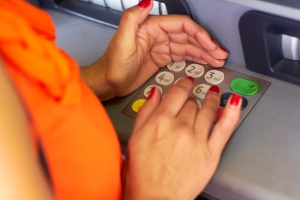
If someone can steal your PIN, they can likely pretend to be you and use your account. That’s why it’s essential to be aware of your surroundings when using your card at an ATM. Someone waiting in line behind you can peer over your shoulder to see your PIN, or even withdraw more money if you forgot to end your transaction before walking away.

A more stealthy way criminals can try to take your money is by installing card skimmers on ATMs to capture people’s debit cards. Skimmers are hard to identify, making it challenging to even know your information has been compromised. Without taking proper precautions, your information can be sold online or used by criminals to make purchases.

Here are some tips for protecting your ATM/Debit card:

  • Inspect the ATM for possible skimming devices. Some red flags include sticky residue from an adhesive, damaged pieces, loose or extra attachments on the card slot, or noticeable resistance with pressing the keypad. Check out our ATM card skimming and fraud prevention guide for more information and images.
  • Cover your hand over the ATM keypad as you enter your PIN so no one around you can see.
  • Never write down your PIN or tell anyone your number. Keep it as private as possible.
  • Never give information about your ATM card or PIN over the phone. If your bank calls asking for you to verify your PIN, it is likely a scam.
  • Consistently check your accounts for suspicious activity.
  • Keep your card in a safe place and don’t ever leave it lying around – even at home.

Be alert at the ATM

No matter where you’re using an ATM, you’ll need to scan your surroundings for suspicious activity. If you notice someone waiting in a nearby car or hanging around while keeping an eye on you, try coming back later or using a different ATM. You’ll want to use your judgment – if something doesn’t feel safe, you’re probably right.

After withdrawing cash, stay alert. Some criminals may try to follow you. If you think that’s the case, find a heavily populated area and call the police. We recommend following these precautions every time you visit the ATM:

  • Bring someone with you when you go to the ATM.
  • Lock your doors at drive-thru ATMs.
  • Avoid using ATM machines at night.
  • Have your card ready as you get to the ATM, and do not linger and count your cash once it’s withdrawn from the machine.
  • Don’t leave your transaction receipt at the ATM.
  • If someone approaches you at the ATM and demands money, give it to them. No amount of money is worth risking your life. Call the authorities as soon as you’re somewhere safe if this happens.

View additional ATM skimming safety tips in our YouTube video.

At First Financial, we are here to help protect our members from fraud, scams, and identity theft. If you have any concerns or questions about any of your First Financial accounts, please call member services at 732.312.1500 or visit one of our branches.

Want to see more articles like this? Subscribe to First Financial’s monthly newsletter for financial resources and advice.
How to Outsmart Sophisticated Phishing Scams

You’ve probably heard of phishing. But do you really know what it is – and more importantly, how to protect yourself from falling victim to it? Phishing scams have become very sophisticated, but there are some simple things you can do to protect yourself and keep your personal information safe.

What is Phishing?

Let’s start with a basic description: Phishing is a type of scam where an attacker sends a fraudulent message to trick you into revealing sensitive information – often to access your accounts or commit identity theft.

Phishing attempts usually occur through email, over the phone, or via text message. They can be very well-designed to look or sound like legitimate messages from those you know and trust, such as your financial institution, and may contain a link that directs you to a fake website that looks legitimate.

Tip #1: Do not expect phishing emails to be filtered into your Junk mail. Because they are often individually crafted based on information gathered on your social media sites, they can avoid detection from advanced email filters.

How to Detect Phishing Scams

There are ways to avoid phishing scams if you know what to look and listen for. Be on the lookout for these identifying factors:

  • Inconsistencies in email addresses. Phishing emails will typically come from an unfamiliar, unusual email address. The easiest way to detect this is to hover your cursor over the email address to reveal the true “from” address. This will usually reveal the email as a fraud and can be done without actually clicking into the email itself. For example, if an email allegedly originates from your financial institution, but the domain name reads something else, it’s likely a phishing email. Delete it immediately.
  • Unfamiliar greeting or salutation. Sometimes the informality or other irregularity of a salutation can and should provoke suspicion. Be on the lookout for this type of irregularity in emails and text messages, and perhaps even phone calls. For example, if your financial institution greets you with a nickname you don’t use with your accounts, it’s an indication of phishing.
  • Bad grammar, spelling mistakes or unusual language. Legitimate emails and text messages will not have these mistakes. However, they are often found in phishing scams.
  • Demand for urgent action. This is key! Emails, text messages and phone calls threatening some type of negative consequence, loss of money, or missed opportunity are key factors in phishing scams. The urgency prompts you to act without thinking and is what ultimately gets intelligent consumers to fall for these well-designed phishing scams. The scams have flaws, but the panic they create can cause consumers to take swift action before errors can be spotted.
  • Requests for passwords. Do not respond to a text alert, email, or phone call asking for a password, PIN, or any other security information. Never give this information to anyone, even if you think it’s your bank or credit union. They will never ask you for this information. Ever.

Tip #2: Be wary of long text numbers. If you receive a text message from an unidentified number longer than 10 digits, the odds are high it’s a scam.

More Do’s and Don’ts to Protect Yourself

  • Don’t click on links in an unsolicited email or text message.
  • Don’t use the phone number a potential scammer provided in an email or text message. Look up the company’s phone number on your own and call to verify the authenticity of the message or request.
  • Don’t give out personal information such as passwords, credit card numbers, bank account numbers, dates of birth, or Social Security Numbers.
  • Don’t respond to suspected phishing emails, text messages or phone calls, even if you think it would be fun to tease or trick them. It’s best to avoid responding in any way.
  • Do be suspicious of anyone pressing you to act immediately.

Tip #3: Phone numbers and caller identities can be faked to look like the caller ID is from a business you know and trust, like your financial institution. Never trust that the caller ID is accurate. It is best to look up the company’s phone number on your own and call them.

If you detect suspicious activity, contact the alleged company directly. In the case of your financial institution, call at the number listed on the back of your bank-issued debit card, in your banking app, or the bank’s official website.

To learn about other scams and ways to protect yourself, visit zellepay.com/pay-it-safe.

At First Financial, our goal is to help protect our members from scams and identity theft. If you have any concerns or questions about any of your First Financial accounts, please call member services at 732.312.1500 or visit one of our branches.

 Zelle and the Zelle related marks are wholly owned by Early Warning Services, LLC and are used herein under license

Send Yourself Money? That’s a Big Red Flag

Scammers are always creating new ways to steal your money. One of the recent scams utilizing peer-to-peer payment services is what’s known as the “Pay Yourself Scam.”

The gist of the scam is that someone pretending to be a representative from your bank or credit union tells you that there has been a fraudulent transaction and in order to stop it, you need to send yourself money with Zelle®. That sense of urgency really works in their favor and gets unsuspecting consumers to act immediately.

The best way to avoid this scam is to know what to look for. Here’s how it unfolds:

  • It starts with a text message from a scammer that looks like a fraud alert from your bank or credit union. It looks real and urgent!
  • If you respond to the text message and engage the scammer, you’ll receive a call from a number that may appear to be your bank or credit union.
  • The scammer pretends to be calling from your bank or credit union and offers to stop the alleged fraud by directing you to send yourself money with Zelle®.
  • In reality, the scammer is tricking you into sending money to their bank account.

How the Scam Works

So how are the scammers diverting money to their account?

When you enroll with Zelle® initially or if you switch your enrolled U.S. mobile number or email address to a different account, your bank sends you a security code to verify your identity. In this scam, the fraudster pretends to be calling from your bank or credit union saying that they need this passcode to authorize your payment to yourself. That should be a big red flag to you. Your bank will NEVER ask you for this security code, nor will they ask you to send money to yourself.

If the scammer gets the one-time passcode, they can link their bank account to your U.S. mobile number or email address. Now the money you thought you were sending to yourself is sent directly to their bank account.

Check out this YouTube video on how the scam works.

Staying Safe in a World of Scammers

How can you avoid being tricked? Always keep these tips front of mind:

  • Never discuss account numbers, PINs, or other personal information with anyone who contacts you, even if they say they are from your bank or credit union.
  • If the person claiming a problem with your account needs your account information, hang up and call the bank yourself.
  • Don’t call the number in a text, email, or voicemail. It will connect you directly with the scammers. Always look up the number online or review the number listed on your debit or credit card.
  • Don’t click on text message links from people you don’t know, even if it looks like it’s your bank or credit union. These links can be deceiving and direct you to a fraudulent site or expose your device to malware.
  • Your bank or credit union will never ask you to send money to yourself (or anyone else)! If you detect suspicious activity regarding Zelle®, hang up and contact your bank or credit union directly at the number listed on the back of your bank-issued debit card, in your mobile banking app, or on their official website.

To learn about other scams and ways to protect yourself, visit zellepay.com/pay-it-safe.

At First Financial, our goal is to help protect our members from scams and identity theft. If you have any concerns or questions about any of your First Financial accounts, please call member services at 732.312.1500 or visit one of our branches.

*U.S. checking or savings account required to use Zelle®. Transactions between enrolled users typically occur in minutes.

 Zelle and the Zelle related marks are wholly owned by Early Warning Services, LLC and are used herein under license.