5 Ways to Entertain Yourself Without Breaking the Bank

Look for discounts: Some local Regal Cinemas have a value day – does yours? Find out when your local Value Day is here. Don’t have a Regal around? Look for a coupon code here.

Head to the library: Books are free to check out (as long as your return them on time) and there’s no better price than $0. Find something exciting to read and your weekend is planned. Don’t feel like reading? Check out your library’s DVD section and watch one of those blockbusters you never got around to seeing.

Volunteer: When was the last time you spent your weekend doing something for someone else? Head down to the local food bank or find out if Habitat for Humanity is doing anything nearby. Not only will you feel good when you’re done volunteering your Saturday, but you may pick up some skills that you can use in your own home.

Find free events: Somewhere in your town there’s something free to do. Grab a newspaper or check the window at your local coffee shop. And don’t forget to check out our Monthly Things to Do on a Budget in Monmouth and Ocean Counties blog posts!

Go visit Mother Nature: Hike a nature trail, head to the mountains, or throw a worm in a pond and catch a fish. These are relatively cheap (if not free) options. Don’t know where to go hike? Check out Recreation.gov.

Article Source: John Pettit for CUInsight.com

First Financial Foundation Awards Scholarship to Rutgers University Student

Press Release

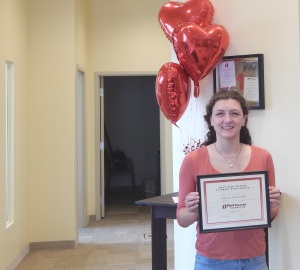
FREEHOLD, N.J.– The First Financial Federal Credit Union Foundation (www.firstffcu.com) recently awarded a $500 scholarship to Juliana DiGiacomo of Freehold, who graduated from Biotechnology High School in Freehold. She is  attending Rutgers University’s (Piscataway, NJ) School of Arts and Sciences Honors College.

In order to qualify for the scholarship, high school seniors attending school in Monmouth or Ocean Counties were given the option to submit a written essay or create a 60 second video clip. The students must also be attending an accredited 2 or 4 year college or university. Four winners were selected to receive a $500 First Financial Foundation 2017 Erma Dorrer Literary Scholarship.

Essay topic: You and a friend decide that you would like to start building credit. Discuss with your friend what good credit is, ways to start building credit, how your credit union can help, and the benefits earned by having good credit.

Video topic: Create a 60-second video that covers the importance of financial literacy.

DiGiacomo submitted an essay in which she explained that it is important “to develop good credit because it shows banks, credit unions, employers, landlords, utility providers or really anyone, that you can be trusted, not only financially but in many other respects as well.” She ended her essay with the assertion that “being in debt and paying bills seems scary to us right now, but it’s part of becoming an adult.”

“We are thrilled to be able to aid these admirable and bright young students in their journey of success and education,” said First Financial President and CEO, Issa Stephan. “Our credit union puts a high priority on education. After all, that’s how First Financial began in 1936 – with a group of schoolteachers in Asbury Park.”

# # #

About the First Financial Foundation: Since 1994, First Financial has supported the Monmouth & Ocean communities with the Erma Dorrer Scholarship Program. Today, that program has been extended into the First Financial Foundation to assist charitable organizations of the Monmouth & Ocean County Communities.  The First Financial Federal Credit Union Foundation is a non-profit working to support a variety of community programs and organizations throughout Monmouth and Ocean Counties.  We direct 100% of your contributions to programs because all administrative expenses are paid for by First Financial Federal Credit Union.  To learn more, visit http://www.firstffcu.com.


4 Tips for Buying Your First Home

The search for your first home can be stressful. Finding the right one is no cakewalk. You look at dozens of houses and neighborhoods, trying to find the perfect fit. And that’s only half the battle. If you’re looking to buy your first home, here are some tips to help you through the process.

Have a good grasp on your credit: Your credit score is of the utmost importance when trying to buy your first home. It can drastically effect your interest rate and even prevent you from getting the loan altogether. Make sure you credit is in good shape before you start the journey to purchasing your first home.

Figure out how much home you can afford: Imagining yourself in the empty mansion across town is fun, but be realistic. Look at your budget, find out how much extra money you have at the end of each month (add your current rent & utilities to this total), and you’ll have a good idea of what kind of mortgage payment you can handle. If you’re going from an apartment to your new house, remember to factor in the difference in utilities, taxes, insurance and any unexpected expenses that could pop up along the way.

Sort out the needs and wants: It’s good to make a list of the things you NEED to have in your new house, and the things you WANT to have in your new house. When buying your first home, it’s important to remember that you may not necessarily be buying your dream home. You can definitely find a home that meets a lot of the criteria on your checklist, but know you may have to give up a few of your wants in order to find a home that fits your budget.

Find the right realtor: Your realtor’s job is to help you out on this nerve-wracking journey and make the process as easy for you as they can. Pick a realtor who makes you feel comfortable and knows what they’re doing. If they don’t seem to care about meeting your needs, find someone who will.

First Financial offers a number of great mortgage options, including refinancing – click here to learn about our 10-, 15-, 20-, and 30-year mortgage features and see what a good fit for your home is!*

*APR = Annual Percentage Rate. Subject to credit approval. Credit worthiness determines your APR. Rates quoted assume excellent borrower credit history and are for qualified borrowers. Your actual APR may vary based on your state of residence, approved loan amount, applicable discounts and your credit history. Higher rates may apply depending on terms of loan and credit worthiness. Minimum mortgage loan amount is $100,000. Available on primary residence only. The Interest Rates, Annual Percentage Rate (APR), and fees are based on current market rates, are for informational purposes only. Rates and APRs listed are based on a mortgage loan amount of $250,000. Mortgage insurance may be required depending on loan guidelines. This is not a credit decision or a commitment to lend. If mortgage insurance is required, the mortgage insurance premium could increase the APR and the monthly mortgage payment. See Credit Union for details. A First Financial membership is required to obtain a Mortgage and is open to anyone who lives, works, worships, or attends school in Monmouth or Ocean Counties.

Article Source: John Pettit for CUInsight.com

First Financial Foundation Awards Scholarship to Stockton University Student

Press Release

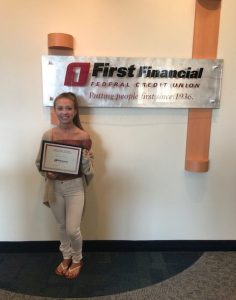
FREEHOLD, N.J. – The First Financial Federal Credit Union Foundation (www.firstffcu.com) recently awarded a $500 scholarship to Nicole Weaver of Toms River, who graduated from Toms River High School North. She is attending Stockton University (Galloway, NJ) to pursue a B.S. in health science and then a M.S. to become a future physician’s assistant.

In order to qualify for the scholarship, high school seniors attending school in Monmouth or Ocean Counties were given the option to submit a written essay or create a 60 second video clip. The students must also be attending an accredited 2 or 4 year college or university. Four winners were selected to receive a $500 First Financial Foundation 2017 Erma Dorrer Literary Scholarship.

Essay topic: You and a friend decide that you would like to start building credit. Discuss with your friend what good credit is, ways to start building credit, how your credit union can help, and the benefits earned by having good credit.

Video topic: Create a 60-second video that covers the importance of financial literacy.

Weaver submitted an essay where she explained that “having good credit is extremely important, and if you have good credit you may receive a lower interest rate on big items – such as a house or car.” She also mentioned that “a credit union such as First Financial, can help individuals start building credit by offering help or counseling on how to effectively build your credit without going beyond your means, and that credit unions can also offer low-cost secured loans.”

“We are thrilled to be able to aid these admirable and bright young students in their journey of success and education,” said First Financial President and CEO, Issa Stephan.  “Our credit union puts a high priority on education. After all, that’s how First Financial began in 1936 – with a group of schoolteachers in Asbury Park.”

# # #

About the First Financial Foundation: Since 1994, First Financial has supported the Monmouth & Ocean communities with the Erma Dorrer Scholarship Program. Today, that program has been extended into the First Financial Foundation to assist charitable organizations of the Monmouth & Ocean County Communities.  The First Financial Federal Credit Union Foundation is a non-profit working to support a variety of community programs and organizations throughout Monmouth and Ocean Counties.  We direct 100% of your contributions to programs because all administrative expenses are paid for by First Financial Federal Credit Union.  To learn more, visit http://www.firstffcu.com.

3 Ways to Save During Football Season

While awesome, football season can also be expensive. If you’re planning on having big football weekends for the next few weeks, you’ll need to make sure you’re budgeting for all the money you’re going to spend. Here are 3 ways you can save this football season.

Raise some cash: If you’re going to spend a lot of money this football season, try figuring out a way to raise some extra dough to fund your fun. Having a yard sale could be a great way to raise some cash. Have a bike or some free weights you don’t use much anymore? Throw it up on EBay or Craigslist and turn it into some ribs and chicken for the game.

Do it right or don’t do it: We all love the big games, especially when our team is involved. When those weekends roll around, do it big! If you’re throwing a party, grill it up and stock up on beverages. Having a big event is always fun. If you plan on attending the game, plan out an exciting tailgate and do it right. When your team is involved in a lopsided matchup, keep it more low-key.

Split your tickets up: Feel the need to be at the stadium a lot this season? Try splitting those season tickets with a friend. You can go to games together or divide the games and take other friends and family. This way, you’ll each get to see 3 or 4 games for a decent price. You can even sell your tickets for one of the bigger games, avoid getting stuck in the crazy traffic, and maybe even fund the rest of the season.

Article Source: John Pettit for CUInsight.com

Online Dating Scams are Actually a Thing, and They’re Breaking Hearts & Bank Accounts

It’s happening all over, and closer to home than you may think. Scammers are continuing to fake online dating profiles using photos of other people to lure their victims. Once connected, the scammers often say they are from the U.S., but are temporarily traveling or working overseas. The scammers quickly profess their love and tug at the victim’s emotions with fake stories and their need for money. The victims often send the scammers money or provide online banking login credentials.

How exactly does the scam work?

  • The scammers start by stealing a photo from an internet site. The photos are usually of beautiful people and the quality of the photo is high. The photos are usually stolen from modeling sites with reports that 90% of them are being taken from a site called Focus Hawaii. If you think you are being scammed, go to this site and browse the photos to see if the person you are communicating with has a photo on this site. They also use photos taken from profiles of other people on dating sites.
  • They then post ads with fake profiles on online dating sites. They also lurk in chat rooms and social networking sites, as well as Christian and other religious-based dating sites. They spend months chatting up and luring their targets with online intimacy.
  • The scammers often pretend to be foreign specialists temporarily working in Nigeria or other overseas countries. A slight twist is when the scammer pretends to live in the same country as the victim, and once a relationship has developed, then advise them they are required to go to another country on an assignment. Some of the sophisticated scammers send flowers or candy (from stolen credit cards) to capture hearts.
  • The fraudsters then choose one of two approaches: 1) They either state that their employer pays them with money orders and they can’t cash them in Nigeria or are having trouble cashing them. Then they convince their “soul mate” to bank this deposit into their bank account and wire them the money via Western Union. They are often told to keep some of the money for their trouble (which helps to build trust and also helps make them an accessory to the crime!). After a few weeks the bank will tell the victim that the money orders are fraudulent and then the victim is often responsible for paying the money back to the bank, and in some cases face charges of passing a counterfeit instrument. 2) The alternative is to say their wallet has been stolen, the hotel owner is holding their passport, customs officials need to be bribed, new plane tickets are needed, they have been victimized and put in jail and need money to get out, or they need money for some sort of medical reason, etc. The reasons for needing the money will sound plausible. Regardless of the story, the end result is the same – the cyber “soul mate” is asked to send money!

Other romance scam variations include:

  • Victims are duped into providing online banking login credentials to the scammers under the guise that the scammers do not have access to financial services in the foreign country in which they are traveling or working. The scammer logs into the account and uses the account-to-account external transfer feature to initiate debits against accounts at other institutions pulling funds into the victim’s account for deposit. The victim is instructed to send the funds to the scammer by Western Union or MoneyGram. The debits are subsequently returned to the financial institution as unauthorized up to 60 days later.
  • The scammer logs into the victim’s account and accesses the mobile remote deposit capture service, or requests access if it isn’t already set-up. The scammer transmits images of fraudulent checks via mobile deposit to the victim’s account. Again, the victim is instructed to send the funds to the scammer by Western Union or MoneyGram. The checks are subsequently returned unpaid.

How to spot an online dating scam:

  • The person is new to the website or hasn’t logged in many times.
  • The photo looks like a model or looks “too good to be true.”
  • The profile is not well written.
  • You are asked to go straight from on-site messaging to off-site messaging such as regular email or instant messaging (to prevent the dating site administrators seeing the evidence of the scam and kicking them off the site).
  • The scammer will find ways to get out of live video chat because the profile photo is fake. The excuse they will give is their lack of technology overseas. They will usually hire someone with an appropriate accent for the phone calls.

Follow these specific safeguards for online dating:

  • Research the person’s photo and profile using online searches to see if the material has been used elsewhere.
  • Go slow and ask lots of questions.
  • Beware if the individual seems too perfect or quickly asks you to leave a dating site or Facebook to go “offline.”
  • Beware if the individual attempts to isolate you from friends and family, or requests inappropriate photos or financial information that could later be used to extort you.
  • Beware if the individual promises to meet in person, but then always comes up with an excuse why he or she can’t. If you haven’t met the person after a few months, for whatever reason, you have good reason to be suspicious.
  • Never send money to anyone you don’t know personally!

What to do if you suspect someone you are communicating with is an online scammer:

  • Once the scammer has asked for money, stop all communication with them.
  • Report them to the dating site.
  • No matter how trustworthy they may seem, DO NOT SEND THEM MONEY!
  • If you have already sent them money – your chances of getting it back are probably zero, but you should report the incident to your local police and the FBI’s Internet Crime Complaint Center (IC3).

T.H.I.N.K First because There’s Harm INot Knowing!

Article Sources:

https://www.fbi.gov/news/stories/romance-scams

http://www.watchforscams.com/nigerian-dating-scams.html