3 Tips for Saving Money During Cold and Flu Season

A young woman lying on her couchEven if we wash our hands and try our hardest to stay healthy, the reality is that winter and cold and flu season are upon us and often can’t be avoided. Even if you’re not feeling well you don’t have to let your wallet feel the pain too. Here are three tips to help save a few bucks when you’re dealing with a cold.

Buy generics

You may lean toward buying the name brand, and more expensive, over-the-counter cold and flu medicines thinking they will work better. Before you do, compare the ingredients with that of the store brand products. More often than not, you will find that they are identical and the generic brand can save you a great deal.

Try home remedies

When your symptoms first show up and before you rush to the pharmacy, be patient and try the remedies you learned from mom. Sometimes a sore throat can be caused by the change in seasons so first try vitamins, hot tea with honey, or gargling with salt water. You may be able to nip it in the bud before it gets worse and you end up at the doctor.

Clip coupons

Remember the last time you checked out at the pharmacy and received a long sheet of coupons along with your receipt? It may seem annoying at the time, but hold on to them for the future. Saving even the smallest amount when you’re not feeling well can make your illness seem just a little bit better.

Article Source: Wendy Bignon for CUInsight.com

5 Tips to Lowering Your Energy Bill this Winter

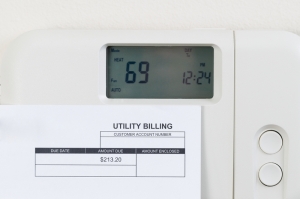
Close up of home heating thermostat with partial utility bill on wall.

It may officially be a couple weeks away, but winter is coming – and with it come extra expenses on keeping warm. A large part of the country will be experiencing lower than average temperatures this winter, but we can all save money by taking the time now to prepare and weatherproof. Consider these tips to maximize your savings before the snow starts falling.

Keep it cool.

When you get home, leave the sweater on, grab a blanket or light a fire in the fireplace to save some real money. You can save 5% on heating costs for every degree you drop your thermostat in the 60-70 degree range, according to the California Energy Commission’s Consumer Energy Center.

Check for drafts.

The best way to lower your winter energy bill is to reseal your home to keep the cold out. By insulating windows, installing window coverings, and sealing drafts around chimneys, cabinets, and closets, you can find the largest return that doesn’t require any lifestyle changes.

Have your furnace inspected.

The last thing you want is for your heat to go out in the middle of the winter, though arguably you would save quite a bit of money. In most markets you can spend around $100 to get your system inspected by a professional who can identify any duct leaks, intake blockages, mechanical failings, electronic failings and more.

Harness the sun.

At night you should have your blinds and thick curtains closed to prevent the escape of heat, but in the mornings open them up to let in as much sunlight and free, natural heat as possible.

Watch your increased waste.

For most of us, winter means we are spending more time inside. We escape the cold weather with the assistance of our electronics. Though, you should be mindful of all of those idle gadgets as they could be eating up a significant amount of power. The EPA estimates that idle gadgets waste more than 100 billion kilowatt hours of electricity annually, costing consumers $10 billion a year. Make sure you unplug every device that you aren’t actively using to keep the cost low.

Article Source: Tyler Atwell for CUInsight.com, https://www.cuinsight.com/5-tips-lowering-energy-bill-winter.html


Stop Wasting Time with These “Money Saving” Habits

Red Old Style Alarm Clock. Isolated on White.

You have probably heard the age old cliché “time is money,” a few times in your life. That saying could not be any truer for money saving habits. There are many great money saving tips out there, but not all of them are worth your time. Here are a few serious time wasters you should avoid.

Clipping Physical Coupons

If you play the “grocery game” using coupons and find yourself compulsively looking at deal matching sites, as well as driving to different stores each week to score a coupon deal – you are wasting your time (and gas).

Digital coupons are much faster, though try not to look at deal matching sites daily – and if you have to, maybe only a few times a month. You can simply go to your local grocery store and browse their sale items to see if items you typically purchase are discounted, or look through their offers online before you go to the store – rather than driving all over town trying to score free items you may never even use.

Using Budgeting Apps

Get rid of any money saving app that takes too long to use daily. It’s not worth the frustration or wasted time. For budgeting to truly work for individuals, it must be simple and a daily habit. You will stay on budget if you can easily look at how much you planned to spend in a certain area, and how much you have already spent in that area. For example, if you know you have budgeted $350 for groceries for the month, you should be able to look quickly at your phone to see how you are sticking to that particular goal.

Making Your Own

A few years ago, there was a huge boom of money saving homemaker blogs. These popular blogs seemed to make everything from scratch and the owners boasted a frugal lifestyle. However, if it takes you almost 30 minutes each to make homemade tortillas and bagels, you are only really saving pennies for both items.

In some cases, making your own food or craft items from scratch just make sense. Calculate the savings versus time spent to see if your DIY project is really worth it. If something saves you $5 but takes you over an hour to do it, is it really worth it? Of course, if you love doing the DIY project, then the time was worth it. Know yourself and do what works for you.

Over Researching Everything

Research is valuable and you can save a lot of money with knowledge. However, don’t research something to death or waste time trying to save just a few dollars. If it takes you 30 minutes looking for a $5 Home Depot coupon code and trying to get codes to work, is that really worth your time or the minimal savings?  If you find a money saving coupon code online right away, then great. But if the process takes much longer than expected and isn’t really saving you that much anyway, it might be better to just order the item and spend the rest of your time wisely.

Article Source: Ashley Eneriz for Money Ning, http://moneyning.com/frugality/stop-wasting-time-with-these-money-saving-habits/


How to be a Savvy Online Shopper

Mobile phone in hand

We all know that online shopping is extraordinarily convenient, and with the holiday season coming up – you might be thinking about it more and more. Whether you’re purchasing a gift for a family member, friend or just treating yourself – you can buy virtually anything from your computer or mobile device. The question is though, are you a savvy online shopper? Below are a few helpful tips for getting the most out of your money while making those mobile purchases.

Subscribe to email alerts – When you visit an online shop, you will often be asked to sign up for their recurring emails. Although no one likes a clogged inbox, take advantage of the discount offered for subscribing (which usually ranges from 10-20%). Email blasts are required to include an unsubscribe option, therefore after you use the promo code provided you can remove yourself from the list if you want to.

Check out online consignment stores and private shopping clubs – Groups like Zulily and Gilt Groupe are free to join and are great resources for finding high-end items at discounted prices. Local consignment stores often have an online shopping option, download the Poshmark app on your mobile phone to buy and sell items, and Facebook also supports many private shopping groups selling high-end items in your local area.

Download retailers’ mobile apps – Companies like 1-800 Contacts will offer customers a percentage off for downloading and ordering through their mobile app. Even a small amount off your purchase can help, and like the email blasts – after you take advantage of the offer provided you can always delete the app from your device if you decide to.

Discover a cheaper way to wander – Don’t automatically assume you can’t travel just because you are on a tight budget. Sign up for alerts from Airfarewatchdog. When you input your ideal travel destination, they will notify you of the best deals available. VRBO and Airbnb have a large selection of affordable accommodations for your next trip, and Living Social offers daily cost-effective updates on unique events, excursions, and experiences in your local area.

Article Source: Wendy Bignon for CUInsight.com, https://www.cuinsight.com/savvy-online-shopper.html  

The Only Diet You Need is a Spending Diet

Fun chef

It’s hard to go even one day without seeing an advertisement for some “fast, amazing, unbelievable” diet. Even if you somehow managed to spend your days away from the television, internet, or social media, you still have to deal with the many times you hear friends and co-workers talk about “losing a few pounds” or trying a new program.

Unfortunately, the diet probably won’t last long and old habits will reign once again. The problem is, psychologically, these dieters aren’t preventing the temptation from catching their eye. And how can they? If one person brings cookies to the office, the dieter might think, “Well, one bite won’t hurt. I don’t want to hurt Suzy’s feelings, she worked hard to bake these.” If that same dieter watches television, the chances are high that they will see at least three food-related commercials during that time too.

What does all of this have to do with money? When someone tries to spend less money (in an effort to trim down expenses), they encounter the same temptation as the food dieters mentioned above. They may go out with friends who are all buying coffees at Starbucks, or they may think that spending a few dollars here or there won’t really hurt their mission to save money.

If you think that, then you need to go on a spending diet. Yes, you read correctly, a spending diet. No matter your reasoning (maybe your significant other lost their job or you’re drowning in student loan debt payments), a spending diet is a simple solution to a seemingly difficult problem.

When you go on a diet, you typically try to rid your kitchen of all of the foods that are now no-no’s. For a spending diet use this concept and hide or cut up all your credit or debit cards. If you can’t find the box of Oreos, you can’t eat it – the same idea goes for your cards.

As for those temptations that are less in your control (like Suzy’s famous cookies), take a step back to think before acting. Do you really need a coffee at 11 in the morning, or is it just the normal stop on your mid-morning walk around the office building?

Spending diets are easy to set up and even easier to implement.

First thing is first: commit to it! Tell yourself that, for exactly one month, you will track what you are spending (and attempt to keep that number as close to $0 as you can).

Second step: cut the temptation in any way possible! One big motivator to stay on your diet is if you constantly remind yourself about the reason for why you began the spending diet in the first place: debt repayment, job loss, saving for a big expense, etc. Your motivator will help you when that 11am coffee is calling your name from across the plaza.

As with any diet, it is okay to slip. Maybe you left your travel mug of coffee on your kitchen counter this morning, and you seem to be dragging today. One $5 morning coffee won’t kill you, or your diet. But just one!

The best way to ensure you keep those extra expenses from creeping up, is to only carry cash for the month you decide to diet.  If you only have $5 on you, that is all you can spend. Once it’s gone, it’s gone, and you need to accept the fact you can’t just whip out your credit card to buy a second coffee (because you hid it at the beginning of the month, remember?).

The spending diet can be an effort to either slim or eliminate non-necessity spending. This much is up to you. Just like a food diet, you need to make the spending diet work for you and your finances, and only you can decide how much you truly want to spend (or save).

Article Source: Will Lipovsky for Money Ning, http://moneyning.com/frugality/the-only-diet-you-need-is-a-spending-diet/


 

5 Tips for a Frugal Fall

fall-into-savingsFall is here and with it comes crisp weather, football, and changing leaves. For many, it is the best time of the year; for others it is the onset of a stressful, and often expensive holiday season. So, here are five tips for a more frugal fall:

Don’t go to the gym – Yes, you read that correctly. Cancel or freeze that gym membership and exercise outdoors. Enjoy the cooler weather while you go for a run (or walk) around your neighborhood, plan a hike, or take a bike ride around town.

Break out the crockpot – Spend time gathering ingredients for a hearty crockpot meal. Enjoy quality time at home with family and friends. Chances are that crockpot will produce leftovers, which will save you even more in the end!  Look for easy recipes on Pinterest.

Winterize your home – Make your home as energy efficient as possible in preparation for the colder months ahead. Seal off drafty windows or doors, shut vents in rooms that aren’t being used, and change the direction of your ceiling fan to draw cooler air up and force warm air down.

Get outside – During hot summer months, indoor activities (such as going to the movie theater or shopping) are a must, which can often come at a steep price. As the weather cools down, do research on things to do outdoors in your community (many of which are free or for a small fee). Visit a pumpkin patch, check out a corn maze, or do some apple picking at a local farm. Don’t forget to check out our monthly Things to Do on a Budget in Monmouth and Ocean Counties blog series!

Start a holiday fund – Saving even a small amount for those upcoming holiday purchases can make a big difference. It can be quite stressful to think of extra expenses on the horizon, but planning ahead can ease that stress and help you enjoy all the fun that comes within these last months of the year.

The perfect way to save for your holiday expenses is by opening a Holiday Club Account right here at First Financial! No need to put yourself into debt over holiday spending – simply save ahead and come out on top (and not in debt)!*

  • Open at any time
  • No minimum balance requirements
  • Dividends are posted annually on balances of $100 or more
  • Accounts automatically renew each year
  • Deposits can be made in person, via mail, payroll deductions, or direct deposit
  • Holiday Club funds are deposited into a First Financial Checking or Base Savings Account

A $5 deposit in a base savings account is required for credit union membership prior to opening any other account. All personal memberships are part of the Rewards First program and a $5 per month non-participation fee is charged to the base savings account for memberships not meeting the minimum requirements of the program. Click here to view full Rewards First program details. Some restrictions apply, contact the Credit Union for more information.

Article Source: Wendy Bignon for CUInsight.com, https://www.cuinsight.com/5-tips-frugal-fall.html