Don’t Fall for a Work From Home Scam

The promises of making it big by working from home are definitely out there, and most of the time it’s a scam. Though you may already be on high alert, online job scammers have gotten more sophisticated – and some may still slip past your radar.

Besides heeding the old adage that if it sounds too good to be true, it probably is – job seekers should consider the following questions when reviewing potential work from home opportunities:

  • Does the job listing include the hiring company’s name and/or does the recruiter or job posting match the company’s information?
  • Are there any upfront costs required to get the job? (Supplies, a minimum investment or training fees).
  • Are there any typos on the site or in any correspondence?
  • Are you being asked to provide personal information like a social security number, credit card number, bank information, or driver’s license?
  • Did they offer you a job on the spot without conducting an interview?

If the answer is yes to any of the above, experts say that’s a red flag, and the “dream opportunity” might become a nightmare.

Here are the 5 most common work from home scams:

Career advancement grant: This scam claims to come from the government, promising you a grant to pursue education or a certification. Scammers ask for your bank account information with the promise that they will deposit the bogus grant money directly into your account.

Data entry scams: There are legitimate data entry jobs that allow you to work from home, but these scammers ask for money up front and/or promise wages that are much higher than normal.

Pyramid schemes: If the only way to make money is by others losing money or paying you as they recruit others, it’s probably a scam. Plus, pyramid schemes are also illegal – so you could be charged with a crime too.

Online reshipping: Don’t ever repack items and forward them to customers outside of the United States. What you’re doing is transporting stolen goods, and not only will you never get paid, you could also be charged with a crime.

Rebate processor: This scam promises you a salary based on the number of clicks your ad receives. It charges a training fee up front for which you will never be reimbursed, and you’ll never receive that salary, either.

Scammers can be very creative in convincing you that a position or company is legitimate, so do your research. Check with sites like BetterBusinessBureau.com, FTC.com, and Scam.com to learn of recent employment scams.

Article Source: Myriam DiGiovanni for FinancialFeed.com

Important Member Alert: Tax Season Phishing Scams

It’s tax filing season, and the Internal Revenue Service (IRS) and state tax agencies have issued warnings related to a recent increase in sophisticated phishing emails. The emails appear to come from the IRS and demand a payment or threaten to seize tax refunds as a result of non-payment.

What is phishing? Phishing is a tactic cyber criminals use to collect an individual’s online banking, credit card, or other identifying account information. Once received, the cyber criminals can use your information and make transactions as you.

The tax refund season is the time of year in which the majority of tax related scams occur and there is increased vulnerability. This year, the IRS has reported a 60% increase in phishing emails attempting to steal taxpayer funds and tax-related information.

Phishing emails can be hard to detect. Often, intimidation tactics and urgent requests are commonly used by cyber criminals. The emails sent in a phishing attempt will appear to come from a trusted source, using a spoofed or compromised email address. Phishing emails usually contain stolen logos and often include hyperlinks to malicious websites, or contain attachments that are embedded with malware or viruses.

Targeted tax time victims have reported that their emails contained the following:

  • An email originating from IRS Online
  • Contained an attachment titled “Tax Account Transcript”
  • A subject line using the phrase “Tax Transcript”

In addition to email phishing scams, similar phone scams have also been reported. A common phishing phone attempt involved a caller claiming to be from the IRS and threatening victims with a lawsuit or arrest if a tax payment isn’t made immediately with a debit card.

To reduce your risk of falling victim to a phishing scam:

  • Remember that the IRS will never initiate contact with taxpayers via email, text, or social media network to request personal or financial information.
  • The IRS also will never call a taxpayer and threaten a lawsuit or arrest.
  • Do not click on links or open email attachments from an unknown or suspicious source. Even if the email appears to be from someone you know, subtle variations will be present in the sender’s email address (for example: JohnSmith1@abc.com instead of JohnSmithI@abc.com).
  • Another red flag for email recipients includes grammatical errors and spelling mistakes. Legitimate professional organizations and agencies typically do not contain such errors in their communications.
  • For more information on preventing and reporting tax scams to the IRS, click here.

Watch Out for Card Skimming at Gas Pumps

The FTC is warning drivers about skimming scams at the pump. Typically, we New Jersey drivers don’t pump our own gas – but if you plan to take any Fall road trips to enjoy the foliage in another state, you might want to be on the lookout for the following gas pump scam.

Skimmers are illegal card readers attached to payment terminals. These card readers grab data off a credit or debit card’s magnetic stripe without your knowledge. Criminals then sell the stolen data or use it to buy items online. You won’t know your information has been stolen until you get your statement or an overdraft notice.

Here are a few tips to help you avoid a skimmer when you fuel up out of state:

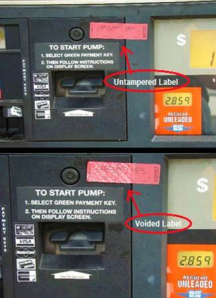
Make sure the gas pump panel is closed and doesn’t show signs of tampering. Many stations now put security seals over the cabinet panel. If the pump panel is open, the label will read “void.”

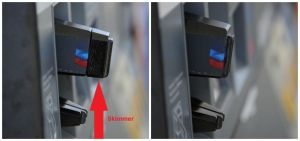
Look at the card reader itself. Does it look different than other readers at the station? For example, the card reader on the left has a skimmer attached, the reader on the right does not.

Try to wiggle the card reader before you put your card in. If it moves, report it to the attendant. Then use a different pump.

  • If you use a debit card at the pump, run it as a credit card instead of entering your PIN. That way, the PIN is safe and the money isn’t deducted immediately from your account if there is a card skimmer attached. Better yet, if you have a credit card on you – use that instead.
  • If you’re really concerned about skimmers, pay inside rather than at the pump.
  • Monitor your credit card and bank accounts regularly to spot unauthorized charges.

If you feel that any of your First Financial accounts may have been compromised as a result of a scam, please contact our Member Relationship Center at 732-312-1500, Option 9 Monday through Thursday 8:30am-5pm EST, Friday 8:30am-6pm EST, or Saturday 9am-12:30pm EST. Learn more about card skimming by checking out our YouTube Video.

Article source: Colleen Tressler for the Federal Trade Commission

Important Alert: Scammers Create Fake Emergencies to Get Your Money

Scammers are now trying to trick you into thinking a loved one is in trouble. They call, text, email, or send messages on social media about a supposed emergency with a family member or friend. To make their story seem real, they may claim to be an authority figure, like a layer or police officer, and they may have or guess facts about your loved one. These imposters may insist that you keep quiet about their demand for money to keep you from checking out their story and identifying them as imposters. But no matter how real or urgent it seems – it’s a scam.

If you get a call or message like this, what should you do?

  • Check it out before you act. Look up that friend or family member’s phone number yourself. Call them or another family member to see what’s happening (even if the person who contacted you told you not to).
  • Don’t pay. Don’t wire money, send a check, overnight a money order, or pay with a gift card or prepaid reloadable card. Anyone who demands payment in these ways is always, always, always a scammer. These payment methods are like giving cash – and are nearly untraceable, unless you act almost immediately.
  • If you sent money to a family emergency scammer, contact the company you used to send the money and tell them it was a fraudulent transaction. Ask to have the transaction reversed, if possible.
  • Report the message to the FTC

Check out this short video on how the family emergency scam works and prevent it from happening to you.

If you feel that any of your First Financial accounts may have been compromised as a result of a scam, please contact our Member Relationship Center at 732-312-1500, Option 9 Monday through Thursday, 8:30am-5pm EST, Friday 8:30am-6pm EST, or Saturday 9am-12:30pm EST.

Article Source: Carol Kando-Pineda for the Federal Trade Commission

Important Member Alert: Mail Fishing Scams

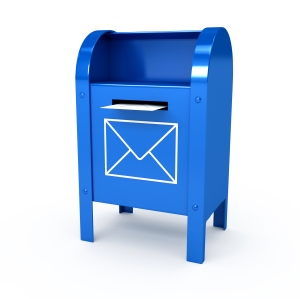
There has been a fraud concern growing in New Jersey called Mail Fishing. Tools covered with sticky substances are being utilized to pluck bank documents and checks out of large blue postal collection boxes. The post office claims they are implementing innovative methods to protect mail, such as replacing collection boxes with new models. Here’s how to keep your mail safe, and additional precautions to take if you’re using a collection box.

5 ways to protect your mail

  • Don’t use a collection box. Instead, use the letter slots inside a post office to drop off mail, or hand it to a letter carrier.
  • Don’t leave mail in your mailbox overnight, especially if you’re expecting checks or credit cards. The U.S. Postal Service discourages sending cash through the mail.
  • Ask your bank for “secure” checks that can’t be altered.
  • If you can’t be there to pick up your mail, make arrangements for someone you trust to pick it up, or contact your post office to hold your mail while you are out of town.
  • Didn’t get that check you were waiting for? Report suspected mail theft immediately to police, then call Postal Inspectors at 877-876-2455 (press 3).

3 ways to use collection boxes safely

Police are discouraging the public from using collection boxes altogether due to these recent security concerns. However, if you must use a collection box, here are the best practices according to police and the U.S. Postal Service.

  • Pay attention to collection times. Last collection for the day is typically at 5pm. If mail is deposited afterward, it will sit vulnerable until the next business day.
  • Avoid dropping mail in collection boxes over holiday weekends, or on nights before holidays. Fishing incidents are most common on Sunday night, according to police.
  • Speak with your local post office or mail carrier to determine which collection boxes in your area are up-to-date with security regulations. Certain collection boxes in New York have been retrofitted with security measures after a rash of mail fishing in the area in 2017.

If you think you were a victim of fraud, identity theft or another mail-related crime, report it at postalinspectors.usps.gov, or call 877-876-2455.

We encourage our members to utilize online banking resources to monitor statements electronically, and pay bills right online, so as to not fall victim to this type of fraud.

If you feel that any of your First Financial accounts may have been compromised as a result of a scam, please contact Member Services at 732-312-1500, Option 9 Monday through Thursday 8:30am-5pm EST, Friday 8:30am-6pm EST, or Saturday 9:00am-12:30pm EST.

Article Source: Jessica Presinzano for northjersey.com


Important Member Alert: Publishers Clearing House Scam

Who wouldn’t love to be that winner you see on TV holding a great big sweepstakes check? That’s what con artists are counting on when they claim to be Publishers Clearing House. This trick is an oldie but goodie for scammers.

The scam starts with a call or letter saying you’ve won the Publishers Clearing House sweepstakes. But to collect your prize, they say, you need to send money to pay for fees and taxes. Typically you’ll be asked to send money by Western Union or MoneyGram, or by getting a reloadable card or gift card. Scammers ask you to pay these ways because it’s nearly impossible to trace the money — and you’ll almost never get it back.

But that’s not the only way scammers get your money with this scam. Some will send you a realistic-looking fake check in the mail. You’re told that, to claim your prize, you need to deposit the check and send some of the money back for made-up expenses. But when the check you deposit bounces — even after it seemed to clear, you may be on the hook for the money you sent.

If you think you’ve won a prize, here are a few things to know:

  • Never send money to collect a prize, sweepstakes check, or lottery winnings. If you have to pay, it’s a scam.
  • Never deposit a check and send back money, even if the funds appear in your account. That’s a sure sign of a scam.
  • If anyone calls asking you to pay for a prize, hang up and report it to the FTC.

Still think this sweepstakes is real? The real Publishers Clearing House says it will never ask you to pay a fee to collect a prize.

If at any time you feel any of your First Financial accounts may have been compromised in a similar scam, contact our Member Relationship Center right away at 732.312.1500. If your First Financial credit or debit cards were compromised in a scam, call the 24/7 toll-free number on the back of your card to report the incident and replace your card. All important phone numbers for members can be found on the Contact Us page of our website.