3 Tips for Getting Control Over Your Spending

Glamour purse fill with money isolated on white background

Two days after you receive your paycheck, do you wonder where all the money went? Is your closet full of clothing and other items that still have the tags on them? Then your spending habits may need some adjusting.

Many consumers aren’t saving enough for a rainy day. The U.S. personal savings rate has increased within the last 12 months (5.3% compared with 4.8% the year before), but there is still room for improvement. Approximately 44% of households across the nation have less than three months of savings, according to the Corporation for Enterprise Development’s 2015 Assets & Opportunity Scorecard. Furthermore, a recent Bankrate Money Pulse survey revealed that less than 4 in 10 people are capable of covering an emergency expense, and about 18% don’t have a budget.

If you’re struggling to control your spending, there are a few things you can do to break bad habits. Here are three tips for regaining your footing and getting back on the path toward financial health.

1. Carry Cash
One of the best ways to keep spending in check is to pay for most of your purchases with cash. When you rely on a credit or debit card, it’s easy to lose track of how much money you’re shelling out. Swiping your card is simple and can make you feel like you have more money than you really do. Cash, on the other hand, will allow you to see exactly what you’re spending. And when the cash runs out, you know it’s time to put your wallet down and stop making purchases for that day. Try your best to get out of the “buy now, pay later” mentality.

2. Use a Spending Tracker
There are plenty of mobile phone apps and online web tools that can assist you with keeping tabs on your spending. If you’ve been slow to devise a budget, these technologies are a great way to get started.

3. Go on a Financial Fast
Resolve to cut out all of your spending for a certain period of time; it could be two weeks or one month, the timing is up to you. When you refrain from spending any money (except on necessities such as mortgage payments and groceries) you’ll quickly see what you can truly live without.

How to Build the Perfect Emergency Fund

Piggy bank stands on 100 dollar papers, isolated on white background

Start small.

While you should eventually build an emergency fund that can handle more serious emergencies (economic downturn, loss of job, etc.), you’re going to want to start by putting together a short-term emergency fund. Your short-term fund is meant to take care of unexpected expenses that while not severe, can still mean trouble if you aren’t prepared. Things like a car repair, replacing a broken window, or getting a parking ticket are all things that can be covered by your short-term fund. Ideally, you’d want this to range anywhere from $500 to $1,000.

Figure how much you’ll need in the long run.

Chances are, if you find yourself out of work or the victim of a natural disaster, $500 to $1,000 won’t be enough to keep your head above water. So to make sure you can keep you (and your family) financially stable for an extended period of time, it’s best to save anywhere between three to six months’ worth of expenses. That may sound like a lot of money (and in most cases it is), but having something to fall back on will make your recovery process all the more easier.

Building yourself a budget is a great way to figure out how much you should aim to save for a long-term emergency. Figure out what expenses you’d really need to be covered (food, shelter, major utilities) and which you can do without for a short period of time (cable bill, online subscription services, etc). Once you get that number, you can start working out a savings plan for yourself depending upon how much you’re able to sock away each paycheck. It might take a lot of time, but having a specific number in mind can really help to keep you motivated.

Tighten up your budget.

If you’re struggling to come up with money to put away for an emergency fund, there’s no better way to boost your cash flow than by tightening up your budget. Writing a concise list of your needs and wants can help you identify what areas of your budget you can cut back on. Think of the extra money you could save just by cutting back on dining out or going without Netflix for a couple months. Once you’ve met your savings goal, you can transition back to your regular spending habits with the peace of mind that you’ll be able to handle almost anything that comes your way.

Drop your debt.

While you’d ideally want to take care of both simultaneously, paying down debt and saving money isn’t something that’s feasible for everyone. In situations like these, it may be in your best interest to prioritize paying down your debt first. The longer you carry debt, the more interest it builds and the more you’ll have to pay over time. Taking on high-cost debt (credit card debt, for example) can also be an emergency in and of itself and be a huge drain on the emergency fund you worked so hard to build.

Furthermore, carrying a high balance on your credit card can have a negative impact on your credit. And the lower your credit score, the more likely you are to get higher interest rates on future loans and credit cards. Getting out of debt, and avoiding unnecessary forms of it, can help you maximize your contributions to your emergency fund and ensure it’s there for when you really need it.

Most people don’t realize how important an emergency fund really is until they’re actually faced with a serious emergency. Putting in the time and effort to build an adequate emergency fund is a simple way to make sure you and your loved ones won’t fall into debt. So do yourself a favor and take the time to evaluate your expenses, build a budget, and start saving today!

10 Ways Too Many People Throw Money Away

Packs of dollar in the garbage can. Waste of money or currency collapse concept. 3d

There are all sorts of ways to cut spending and boost your savings, and there are just as many ways to sabotage your own finances. In addition to missing out on money-saving discounts, making unwise shopping decisions, and purchasing unnecessary items, you might also be throwing your money down the drain without even realizing.  Keep reading to ensure this doesn’t happen to you!

1. Never redeeming gift cards.

Even if you don’t want your gift card, at least give it to someone who will use it. According to statistics compiled by Gift Card Granny, more than $41 billion in gift cards went unused over a 6 year period. American households also average $300 in unused gift cards, and nearly half of recipients do not use the full value of the card. Don’t let dollars go down the drain!

2. Letting Groupons expire.

According to Yipit, roughly 15% of Groupons go unredeemed by the time the expiration date rolls around. Make a note of your daily deal coupon’s expiration date to ensure this doesn’t happen to you. And if your Groupon does expire, you may be able to contact the merchant directly to get some value from it.

3. Buying tickets and not showing up.

Purchasing tickets for a concert, sporting event, or other cultural activity often requires planning far in advance. But if you change your mind later or something comes up, you’ve already spent that money. These days people even buy movie tickets in advance online. If you can’t get a refund, you may be able to at least pass along your tickets to a friend. To make every dollar count, when possible it’s best to wait until you are certain to actually buy your tickets.

4. Paying late fees.

Even small late fees add up quickly. This can include everything from overdue library books, Redbox DVD rentals, or late payments on utilities. To avoid incurring late fees on your credit card, pay in advance of your due date, schedule automatic payment, or set a reminder for yourself. If you are hit with a late fee, call customer service and ask to have the charge waived. On your first offense many companies are willing to let the late fee go.

5. Paying bank fees.

It seems like every year big banks come up with new ways to nickel and dime their customers. Between minimum balances, fees for checking accounts, and ATM fees – these charges can add up. Avoid these unnecessary fees by joining a local credit union like First Financial! Credit unions typically offer free checking accounts and savings accounts with better interest rates.

6. Not returning unwanted goods.

It’s easy to let unwanted items or gifts just sit there in the closet, but with a little effort, you could be getting money back in your pocket. Even if you are past the return date, give it a try anyway. You may be able to at least get store credit. For online purchases, many retailers even cover the cost of shipping for returns. Some retailers will even take returns without a receipt.

7. Failing to ask for a refund.

Consumers who are dissatisfied with their service often don’t take the time to voice their concerns. The ones who do however, could end up with a full refund or at least a discount. If you have a bad experience, don’t be shy about speaking up. Even if you don’t get any money back, retailers and service providers should know when their customers aren’t satisfied.

8. Never disputing mistakes on a bill.

If you think your bill may be incorrect, it’s worth disputing the charges with the company. At most respectable businesses, the error will quickly be corrected. Unexpected medical bills are also a growing problem, and patients almost never file a complaint with a state agency. The Consumers Union online insurance complaint tool is a good place to start.

9. Forgetting to follow up on a rebate.

The sneaky thing about mail-in rebates is they are designed to be so complicated that consumers either forget to mail them in or do so incorrectly. More than $500 million in rebates go unfilled every year, often due to deceptive practices. The Wall Street Journal reported that about 40% of mail-in rebates go unredeemed or are filed incorrectly and denied. Think twice before getting involved in a rebate in the first place. If you are waiting on a rebate check from weeks or months ago, file a complaint with the Federal Trade Commission.

10. Not claiming money that’s yours.

Every year, unclaimed money is reported by the government, and rightful owners are encouraged to step forward and claim their funds. In 2013, states, federal agencies, and other organizations together reported $58 billion in unclaimed cash and benefits. This can include unclaimed IRS refunds, old bank accounts and stock holdings, unclaimed life insurance payouts, mortgage refunds, forgotten pension benefits, and more. Health insurance companies report forgotten funds as well. And if that money isn’t claimed, it gets turned over to the state.

The moral of the story – pay attention, follow up when necessary, and don’t throw good money away!


Emergency Savings – Here’s What You Really Need

3D Illustration of a Piggy Bank and a Stethoscope

Costs related to an unexpected illness or accident can spiral. Here’s the truth about savings in America: We all talk a lot about how much we should be saving and spending, but the majority of us don’t save enough to pay for a surprise expense that must be covered immediately.

More than 60% of Americans don’t have enough money stashed away to pay for unforeseen expenses such as a $1,000 visit to the emergency room or a $500 fender-bender, according to a Bankrate.com study.

The same survey found that 82% of us keep household budgets — mostly with pen and paper or in our heads, but we look to outside help to pull us out of a financial crisis.

Staying afloat after a job loss.

We also seem to have a blind spot about how much emergency savings we actually need. Most financial experts will tell you to stockpile three to six months of paychecks in an interest-earning account like a money market that you can get your hands on without tax or early-withdrawal penalties. But what many unwittingly discovered after job layoffs in the depth of the recession was that three to six months of paychecks for emergency savings wasn’t nearly enough when unemployment lasted six to 12 months, sometimes even longer. It also matters if you’re single or if you’re part of a two-income household, and if you rent or if you own a condo rather than a house.

Cushioning the blow of surprise expenses.

Gauge your emergency savings needs not just on income — but on what you own and what replacement costs might be. How much would a replacement roof be? What about a new transmission in your car? How about a health emergency? It’s the most feared and pricey crisis Americans face and for good reason, since it’s the #1 cause of bankruptcy.

You should be allocating emergency savings into three tiers: minor emergencies, major emergencies and job-loss protection.

  • Minor emergencies

They’re what you’d expect: health-care deductibles and negligible car and home repairs. But be sure you are prepared to cope with multiple minor emergencies around the same time. For example, there could be a domino effect of emergencies, like a car crash could lead to a broken leg and an unexpected car insurance deductible as well as a healthcare deductible.

  • Major emergencies

The good news is that major emergencies don’t happen with the same regularity that minor ones do. A key premise here is that the cash you have on hand — a liquid asset, can be used for any major emergency. The caveat for those with health savings or flexible spending accounts is that those accounts can cover health costs but are hands off for other emergencies.

  • Job loss

In general, there’s a 10% probability that any one of us could lose their job in any given year, according to the Bureau of Labor Statistics. Those numbers, of course, are skewed during recessions and economic hiccups like we’ve seen in recent years. In these cases, according to the BLS, more than 10% of those who are jobless need more than a year to find employment.

Add that all up and the advice is to save enough to cope with a year of unemployment. That’s a tall order, but remember you don’t have to do it all in one year and it doesn’t necessarily mean a year’s worth of paychecks – but rather a year’s worth of expenses covered. Unemployment insurance is considered too. In two-income families, it’s unlikely that both people will lose their jobs during the same year, but they should be covered as if the higher income gets knocked out of the equation.

Hopefully you will never need to worry about most of the items on this list, but it’s always better to be financially prepared and plan ahead when you can!

12 Ideas to Help You Stick to Your Budget


When cravings for pricey dinners out or new outfits hit, it can be hard to stick with your budgeting plan. Whether you’re trying to cut back on spending, or set aside major funds for a life goal like home ownership, it might be time to adopt some new money-savvy habits. These dozen ideas can help you become more disciplined about your spending.

1. Articulate your goals. 

For some people, there’s nothing more appealing than saving for a four-bedroom house with a white picket fence. Others dream of taking a trip around the world or purchasing a boat. Choosing your personal money goals makes it easier to work toward them. If you have a partner, then set aside some time to talk about your individual and joint goals to make sure you’re on the same page.

2. Create a spending plan.

Most people spend about 2/3 of their income on three essentials: food, housing, and transportation. Then there are debt payments, savings, household costs, and optional items like entertainment to consider. Create an annual budget by allocating spending goals for each category – and try to stick to it as best as you can.

3. Resist retailer advertisements.  

Stores are in the business of getting us to spend money, but if we know their tricks, we can better resist the temptation. Rewards cards, enticing smells (like cinnamon around the holidays) and short-term flash sales are a few techniques retailers use; being aware of them can make it easier to just say “no.”

4. Track your spending. ​

Keeping track of every expenditure over a two-week period can offer insight into unnecessary wastes, from restaurant meals to cab rides. You can use a pen and pencil or take advantage of free apps and online tools like Mint.com.

5. Negotiate prices. 

Prices are often a lot more negotiable than we think, even in department stores. If you’ve seen a lower price listed elsewhere, don’t hesitate to ask the store clerk if they can match it. The worst case scenario is getting a “no.”

6. Research big-ticket items online before visiting the store.

Product review sites, coupon code sites and online discount warehouses often provide information and insight into how (and where) to find the best deals. With the proliferation of free shipping codes, the lowest price is often online.

7. Don’t shy away from all debt.

While debt has earned a bad reputation in the wake of the subprime mortgage crisis, managing credit and even taking on some debt can be useful. Mortgages allow people to buy homes and student loans enable people to go to school. Evaluate your debt decisions by considering the pros and cons carefully.

8. Pay off high-interest rate debt quickly.

Credit card loans are among the highest interest rate debt around, averaging roughly 17%. Paying off credit cards as soon as possible can help reduce fees and interest rate charges that balloon over time.

9. Build a solid credit history. 

Lenders base their decisions on whether or not to loan consumers money, and at what rate – partially on their credit histories. That means consumers with a limited credit history (because they have few or no financial accounts) can have trouble taking on a mortgage. Pay bills on time, and be sure to have some accounts in your name.

10. Check your credit report.

Everyone is entitled to a free credit report once a year; you can get yours at annualcreditreport.com. Reviewing it gives you the chance to fix any mistakes that could be hurting your credit score.

11. Review account statements.

An unfamiliar charge on a credit card is often the first sign of identity theft. Review all mail from financial institutions carefully to make sure your accounts aren’t being misused. If you see an erroneous charge, contact your financial institution immediately.

12. Choose the best credit card for you.  

Credit card benefits vary widely. If you tend to carry a balance, it pays to find the card with the lowest interest rate possible. If you’re a frequent traveler, you might want an airline card or a card that comes with travel insurance. Comparison websites such as NerdWallet.com or CreditCards.com can help you find the best card for you.

Article Source: Kimberly Palmer for Money.USNews.com – http://money.usnews.com/money/personal-finance/articles/2015/06/16/12-ideas-to-help-you-stick-to-your-budget


7 Tips for Financial Spring Cleaning

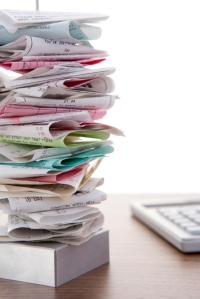
Metal Spike File With BillsSpring is not only a great time to spruce up your home and organize your closets, but it’s also an ideal time to clean up your finances too.

Sweep away winter bills.

Here’s a scary statistic: Consumer Reports estimates that 7% of all shoppers go into a new holiday season carrying debt from the previous one. And it’s costly.You certainly don’t want to continue making payments on your holiday purchases for another 9 months. Try to clear up this debt in the spring.

Polish your budget.

How are you doing so far now that the first quarter of the year has ended? Are you over budget or under budget? Do you even have a budget? If you’re close to your expectations – great, but if you’ve veered off track for any reason – perhaps because there’s been a job switch, you had a baby, bought a new house, or there’s been another life change – it’s time to re-evaluate the situation. Your budget will need to be refreshed to meet current needs as well as short and long-term savings goals.

Tidy up bad credit.

Have you been subject to high interest rates? Denied a loan altogether? Been unable to rent an apartment? If you’ve got bad credit, then you’re aware of these consequences. To improve your score, make your payments on time and avoid carrying large balances on your credit cards (keep your utilization rate — the amount you owe versus your total available credit — below 30%).

Purge clutter.

Now that you’ve filed your income taxes, shred statements, bills and other financial records and keep only the documents that are absolutely necessary. As a rule of thumb, you want to hang onto tax records and supporting documents for seven years, and it might be easiest to keep hard copies of those (even though the IRS is okay with digital copies). Definitely no need to hang onto paper records forever.

Dust off unwanted items.

To boost your savings goals or earn extra money to help pay down debt, sell your unwanted gift cards on a site like Gift Card Granny where you can get up to 95 cents on the dollar in return. There is also Thred Up – a site you can sell baby, kids and women’s clothing. Poshmark is another site (and free mobile app) where you can sell women’s clothing, shoes, and accessories. As for old electronics, consider Gazelle. You’ll get a fast quote, a free shipping label and quick payment once the item’s mailed in and inspected, and the payout is generous.

Clean up accounts.

Are there brokerage accounts that can be consolidated? Bank accounts you rarely — if ever — use that should be closed? Old retirement accounts from previous employers that should be rolled over? After years of bill paying online, do you have a huge list of creditors you have to scroll through every time you make a payment? Try to get all of these cleaned up and organized.

Straighten out spending.

We all know that the key to financial freedom is to spend less than you earn. However, given how easy it’s become to spend, and given the proliferation of ads, marketing schemes and various tactics that tempt us to buy more than we need, keeping spending in check is becoming increasingly challenging. It’s more important than ever that you control impulse shopping. How? Eliminate triggers such as browsing favorite online shops, heading to the mall after work to window shop, or buying something new when you’re feeling down to help boost your mood.

Happy spring financial cleaning!

Article Source: Vera Gibbons for Marketwatch, http://www.marketwatch.com/story/7-tips-for-financial-spring-cleaning-2015-03-12