Questions to Ask Before Applying for a Personal Loan

Personal loans are a popular alternative to credit cards, because like credit cards – they are paid in monthly installments and come with a low interest rate if you have a good credit score. From debt consolidation to paying for life events, personal loans give borrowers money which can be paid back over time. Typically, payments are the same amount each month – as opposed to credit card payments that might vary depending on your balance. Keep reading to get all your questions about personal loans answered, and find out if this is the best financial option for you before you apply.

Is a personal loan right for me?

Personal loans are a way to consolidate high-interest debt at a lower rate. A personal loan can be used for just about anything – a home improvement project, wedding, debt consolidation, or other costly undertaking when you don’t have cash on hand or in the bank. Personal loans give borrowers money up front to be paid back in monthly installments over a fixed period, usually at a rate much lower than a credit card would have.

How much can be borrowed with a personal loan?

This amount will be based on your income, employment, financial history, and how much debt you currently have.  A lender will look closely at your debt-to-income (DTI) ratio, which is the percent of debt you currently have in relation to your before tax income. A favorable DTI is 43% or less, typically.

How much should I borrow?

Just because you get approved for a certain loan amount, doesn’t mean you should accept it. You also need to look at the other items you spend money on each month. Borrow the amount you know you will need to fund what you need the loan for, and don’t acquire extra debt. For help deciding what amount you should borrow or what your monthly payments might be, check out our financial calculators. Make sure your personal loan gets factored into your monthly budget and that you can comfortably afford the payments.

How can I get the best loan rate?

Do your homework ahead of time, and shop around. Often a loan with a shorter term will cost you less over the life of the loan, than one with a longer term will – though your monthly payments will be less on a loan with a longer term. Your credit score (the number that tells lenders if you are credit worthy and the financial risk you would pose) is another important component in receiving a competitive rate. The higher your score, the better your rate will be.

Is there a way to pay off my loan faster?

If you have room in your budget, it’s always a good idea to make extra loan payments when you can. Perhaps you can make bi-weekly payments instead of just once per month, or an extra payment every so often. This will only help you pay your loan off faster and you’ll also pay less in interest. Even rounding your monthly payment up can also help you pay your loan off quicker. For example, say your monthly payment is $173. If you round this amount up to $200 you’ll continue to pay the loan down and will ultimately pay less in interest over the life of the loan. Just be sure your loan doesn’t include any pre-payment penalties before you begin making extra payments.

Can a personal loan help my credit rating?

Part of your credit score is based on credit utilization, and lenders usually like to see that you’re not using more than 30% of your available credit. If you’re planning to use a personal loan to pay off credit card debt, you can actually lower your credit utilization – which should boost your credit score. Because a personal loan is considered an installment loan, whereas credit cards are considered revolving debt – adding it to your credit profile can demonstrate that you can successfully handle other loan types.

How can I apply?

If you live, work, worship, volunteer or attend school in Monmouth or Ocean Counties in New Jersey – check out our personal loan options! Our personal loans have a fixed rate, start at $500, have flexible terms up to 60 months, and no pre-payment penalties.* You can apply over the phone or right online, and we even have electronic closings available.

A personal loan is a great option that can help you save money instead of going through the high cost of retail financing or racking up high-interest credit card debt. Do your research and find the best option for your budget!

*APR = Annual Percentage Rate. Actual rate will vary based on creditworthiness and loan term. Subject to credit approval. A First Financial Federal Credit Union membership is required to obtain a Personal Loan, and is open to anyone who lives, works, worships, volunteers or attends school in Monmouth or Ocean Counties. A $5 deposit in a base savings account is required for credit union membership prior to opening any other account/loan. Federally insured by NCUA.

Article Source: Gobankingrates.com
5 Ways Being Home Can Save You Money

As the public health emergency continues, what are you up to these days – working from home? Taking fewer trips? Eating at home more? Chances are, you’re probably saving money on gas and your usual food tab.

Hopefully, there are other areas where you’ve been able to save money as well. Check out these tips below that can help save you money whether you’re quarantined or not!

Unplug It

How many devices do you leave plugged in during the day? Did you know that even in standby mode, any electronic device that is plugged in will still suck energy?

Energy.gov reports that “an appliance constantly taking in 1 watt of electrical current is equivalent to 9kWh per year, adding up in annual costs (basically $1/watt/annual). Considering how many appliances are used in an average household, costs can quickly add up to $100-200 a year.”

If you’re not using it, unplug it. Or, use a power strip that can be turned off. It’ll save you money in the long run!

Save Water

You might be tempted to throw half a normal load of wash in, but first ask yourself – are there enough dirty clothes to make it worth it or do you have an energy efficient load sensing washing machine? Another tip to conserving energy is washing in cold water when you can, since the majority of your machine’s energy consumption happens when it needs to heat the water.

While you’re home – conserve water by taking shorter showers. If each member of your family reduces their shower time by 3 minutes, you’ll save about $100 a year on your water bill.

Check Your Policies

You’ve probably seen the car insurance commercials advertising a credit to customer accounts. Check into that. Give your insurance company a call or check your account online. Most companies are giving their customers a 15 percent credit because they aren’t driving as much. In some cases, customers are getting a $150 credit added to their policy for the duration.

Don’t sleep on the chance to save some money on your auto insurance. While you’re at it, check on your other policies and accounts. You might find other places offering a similar discount to help out their customers.

Cool It Now

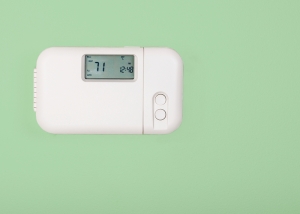
What is your thermostat set on? If you’ve adjusted your thermostat during the day now that you’re working from home more, you might want to tweak that a bit to offset the cost.

Find Your New Normal

We’ve all said it – “when things get back to normal.” But now we’re all in the position to redefine what normal looks like for us. Take a moment to reevaluate your priorities and budget. Are their unnecessary subscriptions you can cut? Is there a magazine, streaming service or even gym membership that is no longer valuable because you’ve found an alternative? If so, cut those from your budget and save some money each month.


Financial and Preparedness Tips for Summer Roadtrips

Amidst the Coronavirus pandemic, as bigger trips get cancelled and flights are limited – some may be considering road trips to other states as this year’s family summer vacation. While the CDC still urges limited travel, those who decide to take a roadtrip should consider the following before hitting the road:

  • What’s actually open? Planning is especially important this summer because many state parks and businesses in certain states may still be closed. Do your research ahead of time.
  • Face masks – Bring one for every passenger, and wear them in public. Even places where it looks like social distancing is in force can become crowded in a hurry.
  • Call ahead – Be sure to confirm any potential restrictions for where you are traveling.
  • Call the hotel – If you plan to stay overnight at a hotel, call ahead to make sure it is still open and will have rooms available.
  • Stop early and often for fuel and breaks, just in case. Check online to see which state-run highway rest stops are open and which facilities are operational.

Auto Maintenance Tips for Traveling by Car:

  • Bring your own protective equipment – This includes gloves for pumping your own gas, paper towels, disinfectant wipes, hand sanitizer, and toilet paper. Some gas stations/rest stops may be limited in what they have available, so be sure to bring your own just in case.
  • Prepare in advance – Be sure to stay up to date on oil changes and have your tires checked before you go. Also check your windshield washer fluid level, coolant, light bulbs, battery life and so forth. Book a service appointment for your vehicle prior to leaving.
  • Do you have a roadside assistance plan? If not, you may want to enroll in one before your trip.

Packing and Preparedness Suggestions:

  • Don’t overload your car, and store the heaviest items low (or opt for a rooftop cargo carrier).
  • Be sure to bring a car phone charger, basic tools, road flares, a flashlight, spare tire and changing kit, and jumper cables.

Did you know that First Financial’s mechanical repair coverage can help you limit out-of-pocket costs should you ever have a covered breakdown? Be sure to check it out before you hit the road this summer. To research, compare, and buy Mechanical Repair Coverage, visit creditunion.forevercar.com/firstffcu or call 855.927.0224

*Mechanical Repair Coverage is provided and administered by Consumer Program Administrators, Inc. in all states except CA, where coverage is offered as insurance by Virginia Surety Company, Inc., in WA, where coverage is provided by National Product Care Company and administered by Consumer Program Administrators, Inc., in FL, LA and OK, where coverage is provided and administered by Automotive Warranty Services of Florida, Inc. (Florida License #60023 and Oklahoma License #44198051), all located at 175 West Jackson Blvd., Chicago Illinois 60604, 800.752.6265. This coverage is made available to you by CUNA Mutual Insurance Agency, Inc. In CA, where Mechanical Repair Coverage is offered as insurance (form MBIP 08/16), it is underwritten by Virginia Surety Company, Inc. Coverage varies by state. Be sure to read the Vehicle Service Contract or the Insurance Policy, which will explain the exact terms, conditions, and exclusions of this voluntary product.

Article Source: Patch.com

Smart Reasons to Live Below Your Means Right Now

Having things and buying items is great, but life can still be amazing even when it’s simple. Cooking meals at home more often will definitely help you save money, and many are probably realizing that due to the recent pandemic. When was the last time you used your credit card just to shop? You are most likely not doing it as often as you used to. Living a modest lifestyle can actually be very satisfying. Even if you haven’t missed a single day of work due to COVID-19, here are a few reasons to live below your means anyway.

You’ll pay off debt faster: Debt is not cheap, which you probably know. If you’ve ever had to swipe your credit card for an unexpected bill you know it can sometimes take years to pay it back. If you’re living paycheck to paycheck, it’s probably even worse. These days during the pandemic, you’re spending has probably slowed down – but if you focus on cutting back even more, it will provide you with an opportunity to pay down your debt even faster.

You can still have amazing experiences: Sometimes we remember the items we spent our money on years ago, and may regret those purchases thinking that we actually wasted our hard earned dollars on them. However if you really think about it, what most individuals remember are the people and experiences in our lives. Once things start to return to normal, most will want to have those experiences with the people that they’re unable to spend time with right now.

You’ll teach your children: Don’t let your kids see you trying to “keep up with the Joneses,” it only teaches them that material things and spending money are important. You want your children to learn to appreciate the little things in life. Recently staying at home and spending time together as a family and playing outside has probably shown them exactly that. Plus, this may also teach them to be a lot more frugal when they’re spending their own money one day.

Article Source: John Pettit for CUInsight.com

How to Avoid Phishing Scams Especially During These Times

In the current environment amidst a worldwide pandemic, fraudsters know most people are frequently using technology to do anything and everything right now. These cybercriminals are counting on society being distracted and letting guards down. One of their favorite tactics to do this is through phishing. Criminals are using email, phone call, text message, website and social media to deploy phishing scams these days.

Here are some common forms of phishing that you might encounter and the warning signs to look out for, so that you don’t become a victim:

1. Phone Call Phishing. Cybercriminals know how to mask phone numbers and change them to make it look like your bank or credit card company is calling you. Usually on this type of call the fraudster tells you they are from the Security and Fraud Department. They will often tell you that your card has been flagged for suspicious activity and you need to prove the card is in your possession. You’ll be asked to give them the 3-digit security code on the back of the card, your PIN, or a one-time passcode they email to you.

2. Email Phishing. There are several warning signs you’ll often see on a phishing email. The most common are spelling and grammar errors, including in the email subject. Also always take note of the sender’s email address. You’ll often see that it doesn’t match up, for example IRS.net (instead of IRS.gov) or using zero’s and other numbers in place of letters in the middle of a sender’s email address (j0hnsm1th@gmail and so forth). Email phishing attempts also often include deadlines, threatening language, doesn’t address you by name, often doesn’t include contact information like a legitimate company email would, and includes suspicious hyperlinks that you should NEVER click on. You should also know that a financial institution will never ask you for any financial information via email.

3. Text Message Phishing. Similar to the phone phishing scam, you would receive a text phishing attempt where the message tells you it’s your bank and they send you a link to click on instead of including a phone number for you to contact them. The message will state that the link in the text is to verify your banking information, a recent transaction, provide your PIN or your 3-digit credit card CVV code. A financial institution will never ask you to click on a link to verify any sensitive information.

4. Website Phishing. A spoofed website will often look strange. Either the web address is off (amaz0n1.com), words will be misspelled, and logos will look blurry or distorted. Sometimes on a site like this you’ll also see a pop up that asks you to enter your personal information. This is another item you should NEVER do. Another thing to note on a phony website, is when you hover over a link – a different address will show. Do not click on these links either.

5. Social Media Phishing. Often you’ll receive a friend request from someone you don’t know or a post asking you to click on a link that requests personal information. If you ever receive any requests like this, ignore them.

For more information on phishing and other computer-based scams, visit the National Cyber Security Alliance at https://staysafeonline.org/

Stay safe and Think First because There’s Harm INot Knowing!

Article Source: usa.Visa.com

Should You Refinance Your Mortgage?

When is it a good idea to refinance your mortgage? Refinancing may not be the best solution for everyone, but for some – it could save a great deal of money in the long run.

Here are three reasons to consider refinancing and weigh out your options and costs:

You could lower your monthly mortgage payment. When you bought your home, you were given an interest rate that was determined by your credit score (as well as other factors, but your credit score played a big part). If your credit wasn’t great at the time, you probably didn’t get the best possible mortgage rate. If you’ve made improvements to your credit score and it’s been a little bit since you purchased your home, it’s possible that you could now get a lower rate which would also mean a lower monthly mortgage payment and more money in your bank account every month.

You’re looking to sell in the near future. With a cash out refinance option, your new mortgage would be more than what you owe on your home. This could be useful if you’re looking to increase your home’s value. Making additions or upgrades to your home may also be a good idea if you’re looking to sell in the next couple years. However, keep in mind that you’ll need to pay closing costs again – so be sure to calculate all your potential expenses to see if this option makes financial sense for you.

You could save more money over time. If you’re currently paying on a 30 year mortgage with a higher interest rate, it may be worth your time to try and get a lower rate on a 15 year mortgage, especially if you have no plans on moving in the next several years. Your monthly payment will be higher by refinancing to a 15 year mortgage, but depending on your new rate – you may end up saving yourself more money long term. This is another scenario that you will need to break out the calculator and determine if this is the best option.

Questions about refinancing and if this might be the best option for you? Contact the Loan Department at First Financial, and we’ll help you decide between your options with personalized service.

APR = Annual Percentage Rate. Subject to credit approval. Credit worthiness determines your APR. Rates quoted assume excellent borrower credit history and are for qualified borrowers. Your actual APR may vary based on your state of residence, approved loan amount, applicable discounts and your credit history. Higher rates may apply depending on terms of loan and credit worthiness. Available on primary residence only. The Interest Rates, Annual Percentage Rate (APR), and fees are based on current market rates, are for informational purposes only, are subject to change without notice and may be adjusted based on several factors including, but not limited to, property location, loan amount, loan type, occupancy, property type, loan to value, debt to income ratios, FICO credit scores, refinance with cash out and other variables. Mortgage insurance may be required depending on loan guidelines. This is not a credit decision or a commitment to lend. If mortgage insurance is required, the mortgage insurance premium could increase the APR and the monthly mortgage payment. See Credit Union for details. A First Financial membership is required to obtain a mortgage and is open to anyone who lives, works, worships, or attends school in Monmouth or Ocean Counties. 

Article Source: John Pettit for CUInsight.com