3 Last Minute Holiday Shopping Tips

colorful shopping bags set in woman's hand isolated on white

The holidays are right around the corner, as in the end of this week! Have you finished all your shopping? Here are three last minute tips to keep in mind as you venture out to fight the holiday shopping crowds this last week of shopping.

10-second rule

When deciding on whether you should purchase something, use the 10-second rule. Hold the item in your hands for a solid 10 seconds and think hard about whether you actually need it or whether it is the right choice for your loved one. Sometimes we are in such a rush to get things done we don’t actually stop and put thought into our purchases. So before you check that gift off your list, give it the 10 seconds to make sure it’s worth your money.

Cash only

It has been proven that we tend to spend more when we shop with our credit or debit cards. It is so easy to swipe that card at multiple stores without really tallying up how much you are spending. Often times it’s not until you check your account that you realize the damage you’ve done to your wallet. Use the cash only rule to avoid this spending problem. Decide exactly how much you want to spend before you leave the house. Take only that amount with you to the store and you will save yourself from those unplanned (and often expensive) holiday purchases.

Go it alone

Having friends and family members in your life that support and encourage you is something to be thankful for. But when it comes to shopping – sometimes having your loved ones with you can be a huge mistake. They may have the best intentions when helping you check things off your list, but they may in fact be persuading you to buy things you don’t really need to. So go it alone and stick to your shopping game plan.

Happy Holidays!

Article Source: Wendy Bignon for CUInsight.com

5 Ways to Make Budgeting Easy Even Around the Holidays

Business man with a santa hat isolated, santa's budget

A budget is essential because having a budget is the first step to achieving financial success. “It’s the backbone of everything else that you do financially,” says David Weliver, founder of financial blog MoneyUnder30. “It all comes down to that golden rule of spending less than you earn. A budget is how you control that.” Think you can’t budget around the holidays?  Think again. You can use these helpful budgeting tips all year long!

Follow the Rules

One guideline of budgeting is the 50/30/20 rule. In the simplest terms, 50% of your income should go to your needs, 30% for wants, and 20% for savings.

What’s a need? For most people, that will include housing costs, whether that’s rent and rental insurance or mortgage payments and homeowner’s insurance. Beyond that, spending priorities can vary greatly. Essentials also might include groceries, car payments, cell phone bills, and utilities.

Wants would fit in the flexible spending category. They might include eating out, going to the movies, buying clothes, or other day-to-day expenses that can vary greatly from month to month.

Finally, the 20% you save should go to your financial goals, whether it’s short-term goals, such as saving for a vacation, or long-term goals like funding your retirement.

These guidelines can be adapted to your personal situation. “It’s okay to set your own ratios,” Weliver says. “But the goal is to try to live so that your essentials are 50 percent or less of your income, and then you have money left over.”

Organize Your Money

Once you set your budget, there’s a good chance you’ll need help tracking your progress. You may want to do so using an Excel spreadsheet, a pencil and paper or an online budgeting tool.

You may even try the envelope method, for which you use cash that you divvy up between a number of category-labeled envelopes. Once an envelope is empty, you’re done spending for that category that month. It’s an extreme strategy, especially in today’s world of plastic and online payments, but it really works.

Weliver suggests a twist on the envelope method: Try using different bank accounts for different types of spending. One account can be reserved for your fixed essential costs, another for groceries, another for dining out and so on. Of course, you need to make sure you are using fee-free accounts.

Focus on Repaying Debt

If you’re carrying a lot of debt, it can quickly consume your budget.

The minimum amount due on any debt you have must count among your essential expenses. Ideally, you want to pay more than the minimum, even if it means socking away less in savings and investments. “Paying down debt is a form of savings,” says Weliver. The faster you pay off your debt, the more you save in interest charges.

There are two common approaches to paying off debt. With one, you tackle the balances with the highest interest rates first. This one will save you the most on interest charges in the long run. The other strategy, often called the snowball method, involves paying off the smallest debt first, which makes you feel good and encourages you to keep rolling until your debt is gone.

If you are carrying a lot of high interest debt across multiple accounts, it may make sense to consolidate or refinance those loans.

Go Digital

Mint is the reigning king of free budgeting sites and apps, but there are tons of other options that work pretty similarly.

The big idea: You connect the site to your accounts with other financial institutions. The site then tracks all of your money’s movements in one place, automatically categorizing each transaction and organizing your expenses into colorful charts and graphs to help you identify spending trends.

Set Spending and Saving on Autopilot

Once you have your budget in place, setting up automatic contributions for your savings and automatic payments for regular bills can make it a breeze to stay on track. Some companies even provide discounts to people who sign up for automatic payments.

Two apps can help you automate your savings further:

  • Acorns rounds up to the nearest dollar on every purchase you make with a linked checking account and automatically invests the change into a diversified portfolio for you. You can customize your risk tolerance and adapt your investments based on personal preferences.
  • Digit monitors your spending habits and, when it determines you can safely afford it, transfers a small amount of money (typically between $5 to $50 every few days) from your linked checking account to a special Digit savings account.

Automating your budgeting and spending will encourage you to save more and make it easier to achieve your financial goals, even when you’re holiday shopping too!

Article Source: http://www.forbes.com/sites/tomanderson/2016/04/05/5-ways-to-make-budgeting-easy/2/#11f576f1558c


 

4 Retail Tricks You Don’t Know You’re Falling For

Two Female Friends With Bags In Shopping Mall

The holiday shopping season is well upon us.  Don’t fall for these common retailer tricks while you are out buying gifts this year, try to keep as much of your own money in your pocket as you can!

The cold clothing store

Ever wander into a department store only to immediately notice a temperature drop? This change isn’t always made for the customer’s comfort. Often times, retailers will lower the temperature on purpose, prompting you to head to the coat section of the store. You may or may not actually purchase a jacket, but they have subconsciously made the thought cross your mind. If you don’t leave that day with new outerwear, you may be thinking now, “Do I need a new jacket? Should I come back and buy one later?”

The 10 for $10

On trips to the grocery store you may notice bins with signage shouting “10 for $10!” Before you fall for the trap, stop and think whether these items are ones you actually need. Do you really need ten boxes of cereal? Also, many customers don’t realize that even though the sign says 10, more times than not this deal often means one for $1 as well.

The “left-digit effect”

Ever wonder why something is priced one cent from the nearest dollar? This sales strategy has been proven successful according to a study by Colorado State University and Washington State University. The “left-digit effect” describes how customers overwhelmingly choose prices like $3.99 rather than $4.00 because when shoppers see the left-digit (lower) number, their brain has a stronger reaction.

The sneaky display

When you’re standing in line to check out and you see the random display of odd-and-ends (think travel coffee mugs, candles, or cookie gift bags) remember this isn’t an accident. There is plenty of room to display these items elsewhere in the store, but retailers choose to place them up front in an effort to add even more items to your purchase.

Article Source: Wendy Bignon for CUInsight.com

5 Money Moves to Make Before the New Year

New year is loading. Holiday concept on a blue background with snow and snowflakes. New year template vector illustration.

Here comes the end of the year. Are you ready financially?

1. Review Your Retirement Contributions

Are you putting enough away for retirement? Now is a good time to check into that. Make sure you put aside what you can for your future. A tax-advantaged retirement account is a great way to go because it increases the efficiency of your earnings, and might even get you a bit of a break on your tax bill now.

Questions about retirement contributions or investments? To set up a complimentary consultation with the Investment & Retirement Center located at First Financial Federal Credit Union to discuss your savings goals, contact us at 732.312.1500, email mary.laferriere@lpl.com or maureen.mcgreevy@lpl.com, or stop in to see us!*

2. Spend from Your Flex Account

If you have a Flexible Savings Account (FSA), you need to use your money or you’ll lose it. This is a great benefit, and comes with a tax deduction, but if you still have money left over and don’t use it for a qualified expense within a certain amount of time, you could lose the money.

Look at your FSA and see if you can spend that money on something that qualifies, like eye exams, new glasses, some medical procedure you’ve been waiting on, or dental work.

3. Harvest Your Investment Losses

You shouldn’t sell an investment lightly. However, you can take advantage of the losses in your portfolio. Consider selling some of the losing investments and deducting the loss before year end. Your investment losses reduce your income by the amount you lose, which helps, especially if you made more money this year than last year. Just be careful to avoid getting caught in the “wash sale rule” from the IRS. If you sell a losing investment, you can’t buy it back within 30 days.

4. Donate to Charity

This is a great time of year to donate to charity. Clean out the house and donate items in good condition to a charity thrift shop. This way you can claim a deduction for charitable goods while also helping a worthy cause. You can also get a tax deduction for cash donations you make. Just be sure to get a receipt from the organization so you have it for your tax records, and be sure to itemize on Schedule A of the federal tax return.

5. Review Your Budget

Now is the time for a budget review. How are things going with your budget? Are you on the right track? What’s worked well this year? What hasn’t? Be honest about how the budget is working. You might need to tweak the specifics before the new year so that you are ready to hit the ground running in 2017.

*Securities and advisory services are offered through LPL Financial (LPL), a registered investment advisor and broker/dealer (member FINRA/SIPC). Insurance products are offered through LPL or its licensed affiliates. First Financial Federal Credit Union (FFFCU) and First Financial Investment & Retirement Center are not registered as a broker/dealer or investment advisor. Registered representatives of LPL offer products and services using First Financial Investment & Retirement Center, and may also be employees of FFFCU. These products and services are being offered through LPL or its affiliates, which are separate entities from and not affiliates of FFFCU or First Financial Investment & Retirement Center.

Securities and insurance offered through LPL or its affiliates are:

Article Source: Miranda Marquit for Moneyning.com, http://moneyning.com/misc/5-money-moves-to-make-before-year-end/

5 Tips to Lowering Your Energy Bill this Winter

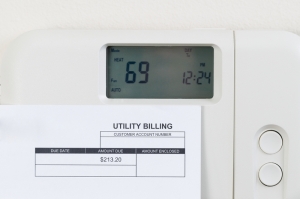
Close up of home heating thermostat with partial utility bill on wall.

It may officially be a couple weeks away, but winter is coming – and with it come extra expenses on keeping warm. A large part of the country will be experiencing lower than average temperatures this winter, but we can all save money by taking the time now to prepare and weatherproof. Consider these tips to maximize your savings before the snow starts falling.

Keep it cool.

When you get home, leave the sweater on, grab a blanket or light a fire in the fireplace to save some real money. You can save 5% on heating costs for every degree you drop your thermostat in the 60-70 degree range, according to the California Energy Commission’s Consumer Energy Center.

Check for drafts.

The best way to lower your winter energy bill is to reseal your home to keep the cold out. By insulating windows, installing window coverings, and sealing drafts around chimneys, cabinets, and closets, you can find the largest return that doesn’t require any lifestyle changes.

Have your furnace inspected.

The last thing you want is for your heat to go out in the middle of the winter, though arguably you would save quite a bit of money. In most markets you can spend around $100 to get your system inspected by a professional who can identify any duct leaks, intake blockages, mechanical failings, electronic failings and more.

Harness the sun.

At night you should have your blinds and thick curtains closed to prevent the escape of heat, but in the mornings open them up to let in as much sunlight and free, natural heat as possible.

Watch your increased waste.

For most of us, winter means we are spending more time inside. We escape the cold weather with the assistance of our electronics. Though, you should be mindful of all of those idle gadgets as they could be eating up a significant amount of power. The EPA estimates that idle gadgets waste more than 100 billion kilowatt hours of electricity annually, costing consumers $10 billion a year. Make sure you unplug every device that you aren’t actively using to keep the cost low.

Article Source: Tyler Atwell for CUInsight.com, https://www.cuinsight.com/5-tips-lowering-energy-bill-winter.html


Press Release: 150 NJ Motorists Amazed by $3,750 in Free Gas

First Financial Federal Credit Union Provides Free Gas in Response to NJ Gas Tax Hike

howell-freehold-exxon-staff-11-15-event

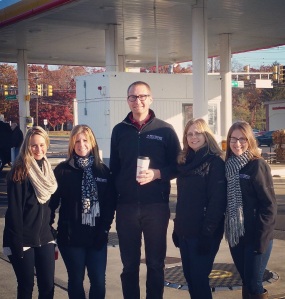
Pictured above: First Financial staff members provide free gas to Howell and Freehold motorists at Exxon on Rt. 9.

FREEHOLD, N.J. – At 6 a.m. at three secret locations during the week of November 14th, New Jersey motorists were stunned to be greeted by employees of First Financial Federal Credit Union where they received $25 in free gas, plus a travel coffee mug. In the wake of New Jersey’s 23-cent gas tax hike, the credit union eased the pain at the pump for 150 drivers with a total of $3,750 in free gas this month.

“This is a really great thing and a nice way to give back to the community,” one motorist said after filling up at the Mobil station at 3330 Rt. 66 East in Neptune on November 16th. Free gas was also given away at the Exxon station at 639 US 9 North in Freehold, where one woman even got out of her car to shake every First Financial staff member’s hand. On November 17th, the First Financial surprise team also provided another 50 motorists with free gas at the Shell station on the corner of Routes 9 and 571 in Toms River.  One woman was so happy with the efforts of the credit union that she opened her membership at the Toms River branch across the street a few hours later.

11-16-np-gas-event-5

Pictured above: A Business Development Representative informs a happy customer about their free gas at Mobil on Rt. 66 in Neptune.

The free gas promotion came soon after New Jersey had its first raise in its gas tax in nearly 30 years. On November 1st, New Jersey went from having the nation’s second lowest gas tax to the seventh highest. The added funds are expected to raise an estimated $16 billion over the next eight years to fund improvements to roads, bridges and mass transit.

11-17-staff-gas-giveaway-tr

Pictured above: First Financial staff members provide Toms River motorists with free gas at Shell on the corner of Routes 9 & 571.

“This was a fantastic three-day event, and not just for 150 lucky New Jersey motorists, but for all of us here at the credit union,” said Issa Stephan, President/CEO of First Financial. “We care about the people outside our walls at the credit union. Our employees also thrive on the positivity and joy they receive when helping our community. We know it’s a busy time of year with the holidays coming up and shopping to do, so if we could help by providing groups of motorists with free gas on their way to work for a few days in the month of giving thanks – we’re happy to be giving back to our community even in some small way.”

neptune-mobile-staff-11-16-event

Pictured above: More First Financial staff members provide free gas to Neptune motorists.

For more details visit firstffcu.com.

# # #

About First Financial Federal Credit Union:

First Financial Federal Credit Union is a community credit union serving Monmouth and Ocean counties in New Jersey. First Financial is a not-for-profit whose goal is to achieve members’ financial dreams by defining their goals and lifestyle, empowering them through financial education, building their wealth, planning their retirement, and managing their risk. Established in 1936, First Financial currently serves more than 19,000 members. First Financial is overseen by a volunteer Board of Directors made up of credit union members. The credit union is federally insured by the NCUA. To learn more, visit http://www.firstffcu.com.