7 Tips for Saving Time & Money When Shopping Online

Ever wonder what the real experts know that you don’t when it comes to online shopping?

Little tricks of the trade that make the buys better, the discounts deeper and the whole experience of online shopping even smoother?

It comes down to a few smart strategies, a little organization — and the willingness to walk away from sites that skimp on consumer must-haves, like convenience and security. These days, when it comes to retail goods, shoppers are making more than one out of every six purchases online, according to statistics from the National Retail Federation. And that number is growing. Want to make your surfing, clicking and buying quicker, cheaper and easier? Here are seven insider strategies:

1. Get the coupons, skip the spam.

What’s the difference between getting a big discount and missing out entirely?

With online shopping it can be a matter of timing. Most online shops “release coupons on the second of the month or on the 27th or 28th,” says Hillary Mendelsohn, author of “the purplebook” online shopping series.

“So that’s good to know, timing-wise,” she says. While coupon codes are great, stores don’t always release them to coupon code aggregating sites, Mendelsohn says.

Her strategy: She registered for a free email account and uses that address to sign up for coupons at the stores she regularly shops. When she’s ready to buy, Mendelsohn logs into the email account and does a quick search for that store. What she has instantly: All its coupons.

“This is a great way of not having your [regular] email box filled with spam and being able to access the deals you want all the time,” Mendelsohn says.

2. Consider automating regular buys.

Have something bulky or heavy that you buy regularly?

Instead of lugging it home yourself, consider setting up an automated order, says Mendelsohn, who uses Amazon’s “subscribe” feature to get her kids’ favorite tea by the case every other month.

“I don’t have to place the order, and I get a discount,” she says. “And it’s free shipping. It makes a huge difference, and I don’t have the schlep it.” What it’s good for: “Big things you need constantly” from diapers to dog food, she says. “You save money, you save time and you save schlep energy.”

Free shipping can also sub in for “free delivery” for large one-time purchases, such as patio furniture and ping-pong tables, she says. With all the options for shopping and delivery, it pays to think strategically and “be smart about what you order online and what you go to the store for,” Mendelsohn says.

3. Coupons + discount gift cards = more savings.

What’s better than a coupon for something you need? Being able to combine that coupon with a discounted gift card to amp up your savings.

And while you often can’t use two different coupons on one item, you can use a coupon with a gift card purchased for less than face value, says Michelle Madhok, founder of SheFinds.com, an online shopping site.

Madhok’s tip: Use a gift card search site (her favorite: GiftCardGranny.com) to find a reputable seller for whatever card you need. And stick with well-known, legit companies, rather than individuals, she advises.

You can often buy them for 6% to 15% off face value and many are ecards, so you don’t have to wait for delivery, Madhok says. Then “stack the deal” with a coupon or promo code, Madhok says. Recently, “I used a digital gift card and coupon code on a $300 purchase and ended up saving about $50,” she says. Want to ratchet that up even more? Use a credit card that gives you rewards or cash back, says Madhok. Some cards will even boost those rewards if you buy from certain merchants or use the card’s app or online site as a jumping off point for your shopping.

4. Use alerts to save, not spend.

Be careful about subscribing to those “daily deals,” says Kit Yarrow, consumer psychologist and author of “Generation BuY: How Tweens, Teens, and Twenty-Somethings Are Revolutionizing Retail.”

Here’s why: They present a sudden deadline, plus an element of competition, she says. “People make hasty decisions when they feel like they’re competing with other shoppers.”

“I’ve found that shoppers tend to end up buying more, and they also buy less-satisfying things through this process,” Yarrow says.

When alerts can save: After you buy. Set up a price alert for the item and if the price drops, email customer service about a refund of the discounted amount, says Madhok, who used this recently to save $70 total on two separate buys. “Usually, they’ll honor it within two weeks” of purchase she says.

5. Make the most of that shopping cart.

If you want to save a few bucks, that shopping cart is valuable real estate.

“Pre-load your shopping cart with items you’re hoping to buy, in order to snap them up quickly if they go on sale,” says Yarrow.

“Most sites don’t empty your shopping cart if you’re a registered user,” she says. “So when they go on sale, you’re ready to go.”

It gives you time to rethink your buying decision, too, she says. “This process also helps shoppers make better decisions because it forces a ‘cooling off period.'” Want an extra incentive not to spend? Consider the cost and hassle of returning before you click “buy,” says Yarrow. And find out who pays return shipping.

6. Find out upfront: Available or back-order?

Shopping under a deadline? Check back-order before you pay, says Leslie Linevsky, co-founder of Catalogs.com.

Ideally, sites should notify you that something is out of stock when you place it in your shopping cart, she says. But not all of them do. Some notify you after you’ve given your card information, but before they bill you, Linevsky says. Others may not tell you at all. So keep back-order in mind as you shop and look for indicators that your merchandise is actually available. If the site doesn’t disclose if an item is in stock, call before you place the order, says Linevsky. Or go to a site that makes it plain, she says.

7. Practice safe shopping.

If you really want to save time and money, it pays to be as safety conscious online as you would be at your neighborhood mall.

Some smart habits:

  • When you’re supplying personal data (such as your name, address or card number), make sure you’re on a secure, encrypted page, says Frank DeBlasi, co-founder of HooplaDoopla.com, a cash-back shopping site.
  • If the URL has an “s” (for “secure”) after the “http,” that means “any information you send is being transmitted securely,” he says. “You never want to shop anywhere that doesn’t have that.”
  • Likewise, you don’t want to use public or office computers for shopping. Information can linger, even if you think you’ve erased it. (Not to mention that some employers actually monitor your keystrokes.)
  • Skip the public WiFi, too, says DeBlasi. “You never know the true level of security of the network you are connected to,” he says. “On your home network, you have control of the level of security.”
  • And watch how you pay. “Always use a credit card when you purchase online, not a debit card,” DeBlasi says. With a debit card, if something goes wrong, you’re fighting to get back cash that’s already missing from your account, he says. “When you use a credit card, you have a middle man in the transaction. And the money isn’t removed from your account.”

Article Source: Foxbusiness.com
new%20ncua%20disclaimer-resized-600equal%20housing%20lender%20logo-resized-600

How Much is Your Habit Costing You?

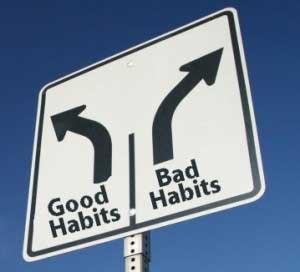
bad-habits-resized-600We all have little habits that tend to drain our finances. Perhaps it’s soda, online games, cigarettes, magazine subscriptions, gambling, wine, or movies. No matter what your poison, if it costs you time or money, it should be examined closely.

Health and moral concerns aside, the wise consumer will examine his or her habits to determine if the benefits outweigh the costs, or if cutbacks are necessary to restore a healthy balance in one’s budget. One of the first steps in this process is to determine what you get (the benefits) out of your habits, and try to place a monetary value on those benefits.

For example, if you like to get a weekly massage, you can list several potential benefits from this activity, like so:

  • Health benefits: Many medical professionals recommend massage to reduce stress, increase circulation, and improve lymph drainage. If your health is compromised, or if you experience a lot of stress in your personal or work life, the monetary health benefits can be extraordinary. Let’s say four massages a week replaces a prescription muscle relaxer. In this case, we could say your monthly massages are worth $80 a month in health benefits.
  • Productivity benefits: In our example, we could imagine weekly massages increase your work performance by reducing stress, allowing you to complete two extra projects a month. The productivity benefits could total $400 a month.
  • Happiness benefits: If your massages bring you immense joy, you are less likely to spend money on other pursuits of happiness, and you can also place a monetary value on how your habit makes you feel. What’s your habit worth to you? How much would you pay to continue it? For our massage example, we could say our happiness value for this habit is about as pleasant as mowing the lawn is unpleasant. If we pay a lawn service $30 an hour, our massages would be worth $30 an hour in happiness, or $120 a month.

That’s a total estimated monetary benefit of $600 a month.

The next step is to calculate what your habit costs you. Not only will you have to determine your out-of-pocket expense (in this case, the cost we pay for the massages), but also such things as the cost of managing negative health impacts, transportation and maintenance costs, and the effect your habit has on your relationships.

  • Out-of-Pocket Expenses: For our massage example, let’s say the cost of a weekly massage is $65 plus tip, equaling $308 a month.
  • Transportation: If we travel 20 miles round-trip to the spa, we’ll estimate it costs you $0.74 per mile to maintain and operate your vehicle, equaling $59.20 per month in travel costs to our support our massage habit.
  • Time: The time you invest in your habit is also considered a deduction. Our massage habit takes up four hours a week, plus two hours of travel time each month. If your time is worth $40 an hour, you’re losing $240 worth of time every month.

For our massage habit example, our total cost is $607.20.

Our conclusion is a weekly massage habit costs us $7.20 a month. Is it worth it? That’s where you need to decide if cutbacks are necessary. If you don’t want to drop your habit, try finding ways to reduce the impact of the overall cost to make your habit a wise choice.

Do you have questions about any of your financial habits or would you like to make an appointment with a financial representative to discuss your financial plans?

Contact a Financial Representative

Article Source: http://moneyning.com/life-style/how-much-is-your-habit-costing-you/

* First Financial is not responsible for the content listed on any external websites.

Take the Stress Out of the Holidays

reduce-stress-holiday-resized-600As soon as we put away our shorts and sandals, we start to feel the pressure of the holidays creeping in. After all, it will be here before we know it, right? But there are things you can do to have a more enjoyable holiday season, and it all comes down to advance planning.

First, put pen to paper and make a written plan, including gift recipients and a detailed budget – both a total budget and a breakdown of that budget by recipient. Once you have your budget, you can begin matching up gift ideas to that budget, and don’t forget to be creative! When you give yourself enough time, you can even plan to make gifts to save on gift expenses. Plus, people tend to overspend more when they shop at the last minute, making desperate purchases – so give yourself plenty of time to get the items on your list. By shopping early, you give yourself enough time to actually enjoy the holidays – and you can shop from a better selection and with fewer crowds.

As you shop, try to keep your distractions to a minimum. That means only go when you are not tired or hungry or have to keep up with family members. Start with the clearance racks and don’t let a salesperson talk you into something you don’t want. And remember, gift cards or charitable donations can offer a stress-free alternative for you, and can be a welcome gift to the hard-to-shop-for person on your list.

When paying for your purchases, try to use cash so you won’t be tempted to rack up credit card debt, and read any fine print involved with special promotions and offers. Always keep your receipts and ask about the return policy. When you get home with the receipts, include a gift receipt with the gift and keep the original receipt in a secure and organized location.

Get togethers can also be stressful at the holidays. Advanced preparation can help alleviate at least some of that stress. You can begin with a written plan, including dates, menus, travel arrangements and the like. Pin down and make arrangements for all the details of your travel as far in advance as possible, and if you are having house guests, start making preparations early for their arrival, such as any home repairs or other accommodations needed. You can even cook many dishes in advance and store them in the freezer, and you can also enlist the help of family members and friends who will be joining you as well.

When the holidays are done and gone, take a deep breath and relax. Treat yourself to something soothing – and then start saving and planning for next year.

7 Ways to Stop Eating Out and Start Saving Money

family%20eating%20at%20dinner%20tableCut back on the amount you spend on take-out and restaurant dining. Although it may be the easier way out to dine out, it will become hard once you realize how much money you actually spend per year at restaurants and fast food venues. The average American household spends almost half of its food budget on eating out — out of about $6,000 spent on food a year, about $2,700 goes to eating out. Alcoholic beverages alone contribute almost $500 to that budget. Eating at home is not only cheaper, but it’s most often a lot healthier too. Here are some ways you can avoid the temptations and cravings of fast food:

1. Grab and eat foods rule. One of the reasons we love fast food is because it’s fast. In just a few minutes, we’re chowing on hot, tasty foods that satisfy our need for immediate gratification. Healthy foods to keep on hand are trail mix, fresh fruits and veggies (precut for easier consumption), granola bars (yes, you can make your own at home), pudding or Jello, pretzels, cottage cheese, salads, and sweet treats like miniature candy bars or Hershey’s kisses. Packaging foods in individual bags makes it easy to take snacks with you when you leave the house, too.

2. Money saved is money earned. Start a special savings fund for something you’ve always wanted, like that new fishing boat motor, an iPad, or an exotic vacation. Every time you’re tempted to eat out, take the money you would have spent on take-out food and add it to your dream fund. The knowledge of saving for something worthwhile is often enough of a motivator to keep you from turning into McDonald’s after work.

3. Make cooking at home enjoyable. Turn up your favorite music, involve the whole family, or splurge on a nice set of spices. Whatever it takes to make cooking enjoyable for you is a worthwhile investment. Trying out new recipes, creating your own dishes, and filling your home with the smells of home cooked food can all be great starting points for fostering a love of cooking. If it’s enjoyable, cooking at home can be healthy and relaxing, making it an ideal hobby.

4. Planning ahead helps you avoid temptation. Menu planning and preparing foods in advance can really help out when you’re feeling unmotivated to cook, and tempted to eat out. You can make your own Hot Pockets and freeze them for later, or keep a prepared menu every week to take the pain out of deciding what’s for supper.

5. Learn to make your favorite fast foods at home. If you simply can’t live without that Big Mac, or you get a weekly hankering for KFC chicken, you can learn to recreate your favorite fast food recipes at home.

6. Make meals a social occasion. Another way to take the pain out of eating at home is to create a meal rotation plan with your neighbors and friends. You rotate meeting at everybody’s homes one day a week to showcase everyone’s cooking skills and to enjoy some fun times. Quite often, the company makes even the most mundane meals exciting.

7. Spruce up your kitchen and dining area. If you take time to make your kitchen and dining area appealing, you will be extra motivated to spend time in those areas of your home. If your kitchen features brightly colored dishes and your favorite framed prints, you might be more likely to be drawn to your own kitchen rather than a fast food restaurant.

Article Source: http://moneyning.com/frugality/7-ways-to-stop-eating-out/

5 Tips for Holding a Frugal BBQ

One of the many joys of summer are BBQs. The aroma of hamburgers and hotdogs grilling, the refreshing taste of lemonade and watermelon and finger licking corn on the cob…can you say YUM?! But as we know, frequent outdoor entertaining can become quite pricey. Here are a few ways to save some money:

portal-graphics-20_1156087a1. Bring Your Own

The classic BBQ frugal tip is to have guests bring their own. They can bring whatever type of meat they want — or other items to grill, including fish, veggies, and tofu/soy based meat substitutes. Not only can this save you money, but it also ensures that everyone is happy with the BBQ offerings.

Even if you don’t have your guests bring their own meat, it’s possible to have them bring their own drinks. This is a great way to make sure that everyone has the drink he or she wants, and it can save you money — especially if your guests prefer alcoholic drinks.

2. Pot Luck

Perhaps you want to provide the meat and the drinks. You can reduce your costs in other areas by asking guests to bring something to share with everyone. Assign chips, fruit bowl, veggie tray, buns, condiments, and other items. You can even ask someone to bring the paper plates, napkins, and cups. If you are doing a themed BBQ, ask someone to bring decorations. This will help you save a little money on the affair, and ensure that everyone has a good time.

3. Consider Plastic Dinnerware

If you are serious about providing BBQ entertainment, you can purchase inexpensive, reusable plastic dinnerware. The initial outlay is a little bit more, but you can reuse the plates, cups, and utensils year after year. You won’t have to keep buying the paper versions (which can get expensive). The clean up isn’t too bad, either, as long as you get dinnerware that is dishwasher safe.

4. Carefully Consider Your Meat Purchases

Those who like providing the meat can do so less expensively by taking care to consider what they choose. Bone-in steaks are often less expensive than boneless varieties (and it helps keep the meat from drying out). You can also buy ground beef and form your own patties, rather than buying pre-made patties. Another option is to make kabobs. You use less meat, and more veggies, so you can keep the costs down. Get creative, and you will find that you don’t spend as much money on your BBQs.

5. Buy Your Grill Items Off Season

Finally, if you want to save more money over time, you should buy your grill items in the off season, and on sale. Get a grill in the fall, and you can get it for much less. The same is true of cooking utensils, as well as outdoor furniture and other items. You can also get charcoal, propane and other related items on discount if you are vigilant about prices. Pay attention, and you can save more over time, and reduce the per-BBQ cost of your outdoor entertaining.

Article Source: http://moneyning.com/money-tips/5-tips-for-holding-a-frugal-barbecue/

Back to School Shopping: 10 Ways to Save Your Money

back-to-school1First Financial gathers some easy tips and advice in order for you to save on back to school shopping:

  1. Coupons and Coupon Codes: It’s all about the bargains. When shopping online, don’t forget about coupon codes that you can apply to your cart. Also, remember to look through newspapers and your junk mail to cut out coupons for various items that might be on your checklist.
  2. Get Ahead: Most clearance items go on sale after the season has ended. Take advantage of this opportunity and buy items for the fall and winter even though it may be spring or summer, you’ll be able to save money and use it for the following year.
  3. Use Your uChoose Rewards: All First Financial VISA® Platinum Cash Plus Credit Cardholders are eligible to earn uChoose Rewards on all purchases, which can be redeemable for merchandise, gift cards, and more. For more information login to your uChoose Rewards Account.
  4. Outlet Shopping: Many people forget that large retailers have factory outlet stores. Outlets are great for special deals and markdowns on your favorite brands without paying full-retail price.
  5. Leave the Kids at Home: Parents, you know all about the guilt-trip. Don’t be pressured to buy certain things and wind up spending more money than you have to!
  6. Use Your Smartphone: They’re called “smart” for a reason. For example, the Google Shopper app enables you to scan an item’s barcode and then it shows the prices for the same product at different stores in your area so you can get the best bargain.
  7. Utilize Social Media: While you’re poking around on Facebook and Twitter, make sure you “like” or follow your favorite stores and brands. They often post different deals, coupons, and promotions that are going on.
  8. Sharing is Caring: Buy in bulk and split it amongst the kids, or save it for later on in the school year.
  9. Don’t Forget About eBay and Amazon: Use these sites to your advantage; your kids don’t need the latest and newest technology, they need something that works and is fitting for them. Frequently, these sites will sell items new or barely used for a great price.
  10.  Maybe Hand-Me-Downs are Good: Do a little “summer cleaning” and go through your kids’ closets and see what could be passed on to another sibling.

If you need additional assistance paying for back to school supplies and clothing, First Financial offers one of the lowest credit card rates around. To learn more about First Financial’s VISA® Platinum Cash Plus Card and apply today, please visit our credit card page.